
How to Copy Trade on Tradingcup: A Beginner’s Step-by-Step Tutorial

John Rey
OCT 23 2026
Last Updated: October 23, 2026
Disclaimer: The information in this article is for educational purposes only and does not constitute financial, investment, or trading advice. Copy trading carries substantial risks, including the potential loss of your entire invested capital. Past performance of copied traders or strategies is not a reliable indicator of future results. You may be replicating high-risk trades, overleveraged positions, or strategies incompatible with your financial goals. Always conduct independent research into a trader’s historical performance, risk metrics, and strategy before copying them. Never invest funds you cannot afford to lose. Consult a licensed financial advisor to ensure copy trading aligns with your risk tolerance, financial objectives, and regulatory requirements in your jurisdiction. This article does not endorse specific traders, platforms, or strategies, and all trading decisions remain your sole responsibility.
TL;DR:
- Automated Trade Replication: Automatically mirrors the live market positions of selected Signal Providers across Forex, Gold, and Crypto directly into your trading account.
- Allocation Choice (Smart Scaling vs. Exact Copy): Replicate orders proportionally based on your account balance relative to the provider’s (Smart Scaling), or mirror their exact lot size regardless of balance (Exact Copy).
- Capital & Deposit Rules: Every Signal Provider sets a specific Minimum Funds deposit threshold required to begin copying.
- Subscription & Billing: Requires an upfront monthly subscription fee deducted from your account upon subscribing, which automatically renews each month on the same date.
- Built-in Capital Protection: Includes a default Account-Level Stop Loss at 50% equity (fully customizable) that automatically closes open copied positions and unlinks your account if equity drops to that floor.
- Vetting Beyond Win Rate: Emphasizes Maximum Drawdown (MDD the largest historical peak-to-trough decline alongside Time-Weighted Return (TWR) Gain % and Money Management Rating (MMR) to assess true trading risk.
- Flexible Management (Pause vs. Stop): Select Pause Copying to block new trades while letting existing positions reach their natural close, or Stop Copying to exit all trades immediately and settle final fees.
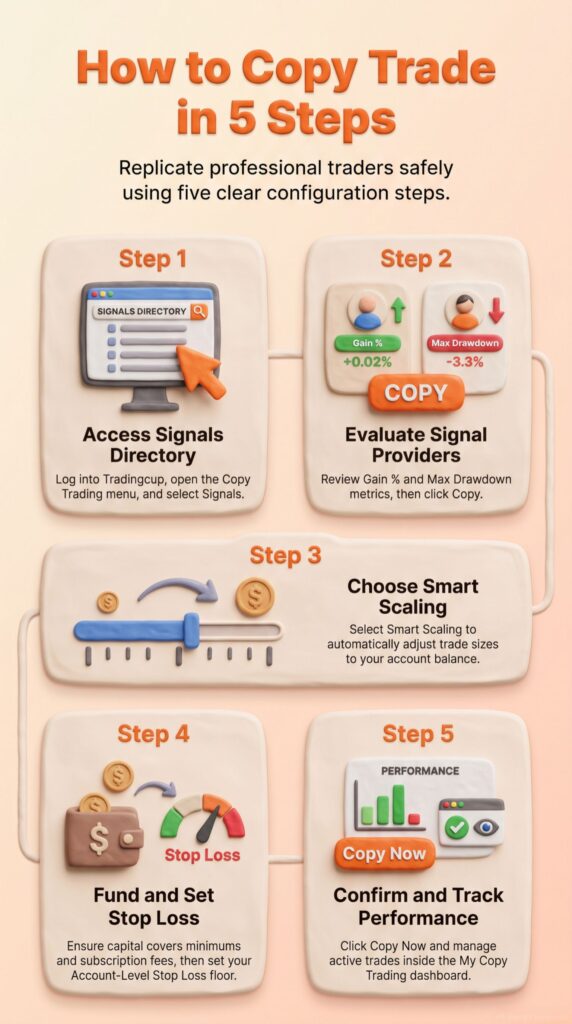
The Complete Copytrade Tutorial: Executive Overview & Practical Mechanics
Copy trading has revolutionized retail financial markets by enabling individual traders to automatically replicate the live market positions of experienced traders formally known as Signal Providers directly within their personal brokerage accounts. Rather than spending dozens of hours each week conducting technical analysis, tracking macroeconomic indicators, or managing order execution manually, retail investors can leverage the verified market acumen of professional traders while maintaining custody and control over their capital.
However, transitioning from conceptual knowledge to placing your first copied trade reveals critical operational nuances that generic guides overlook. Beginners must navigate capital allocation algorithms, upfront subscription schedules, drawdown evaluations, and equity preservation settings. This guide bridges that gap with an authentic first-person walkthrough on Tradingcup, examining every stage from account integration to live risk management.
Core Concepts: Copy Trading vs. Mirror Trading vs. Social Trading
While retail discourse frequently treats copy trading, mirror trading, and social trading as interchangeable terms, they represent distinct execution models:
| Trading Model | Execution Mechanism | Copier Control & Flexibility |
| Copy Trading | Replicates real-time trades from human Signal Providers directly to your account. | High: Full control over lot allocation (Smart Scaling vs. Exact) and custom Stop Loss floors. |
| Mirror Trading | Automatically executes rule-based strategies or pre-coded algorithmic bots. | Moderate: Follows rigid strategy rules with limited manual scaling customization. |
| Social Trading | Open community feed where traders share market insights, analysis, and ideas. | Manual: Copiers review community sentiment and must execute orders themselves. |
The Copier’s Journey: Step-by-Step Implementation Walkthrough
Step 1: Access Tradingcup & Log In
1. Go to Tradingcup.
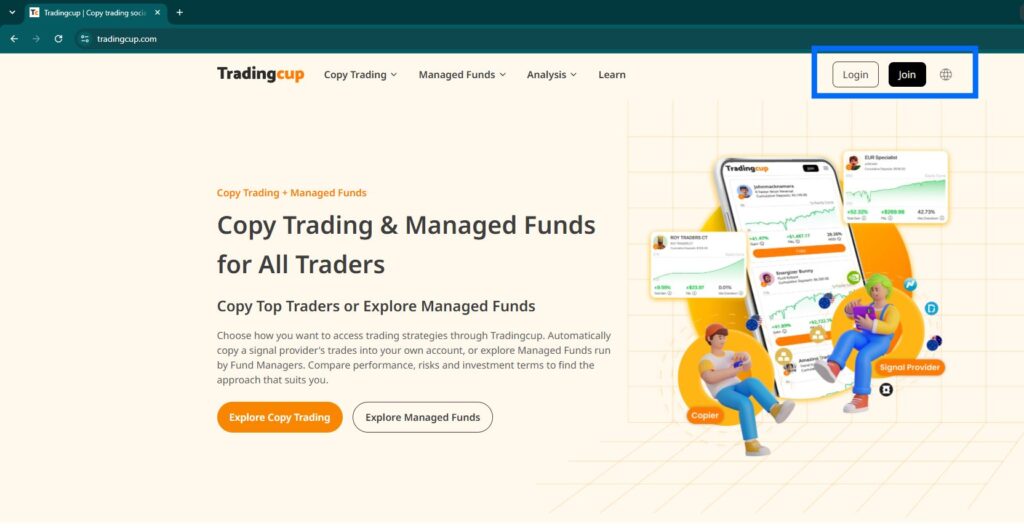
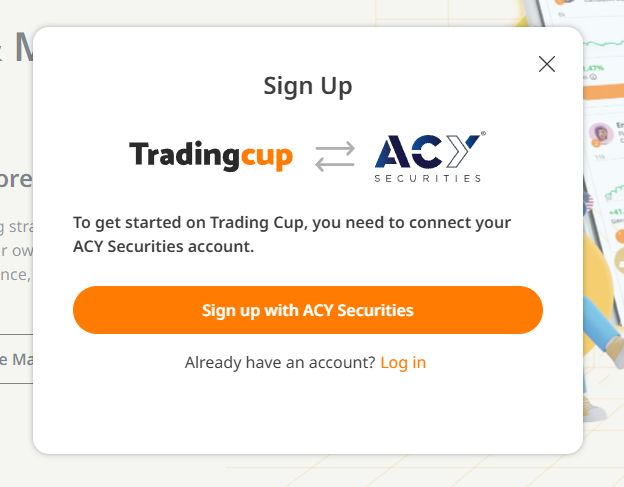
2. Sign in or link your ACY Securities trading account (this is where your live trading balance and margin reside).
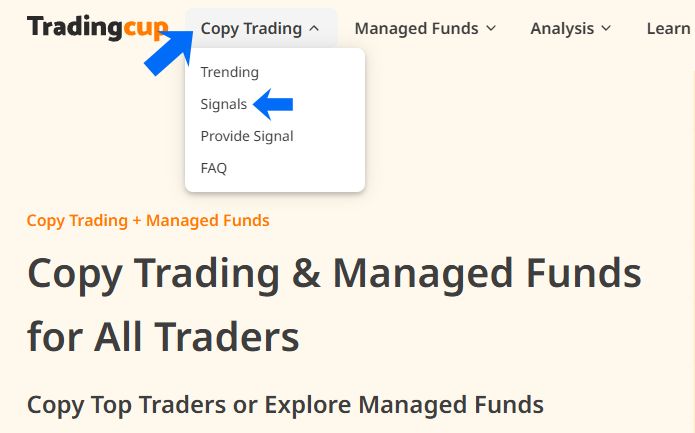
3. From the top navigation bar, click the Copy Trading dropdown menu and select Signals.
Step 2: Scout & Select a Signal Provider
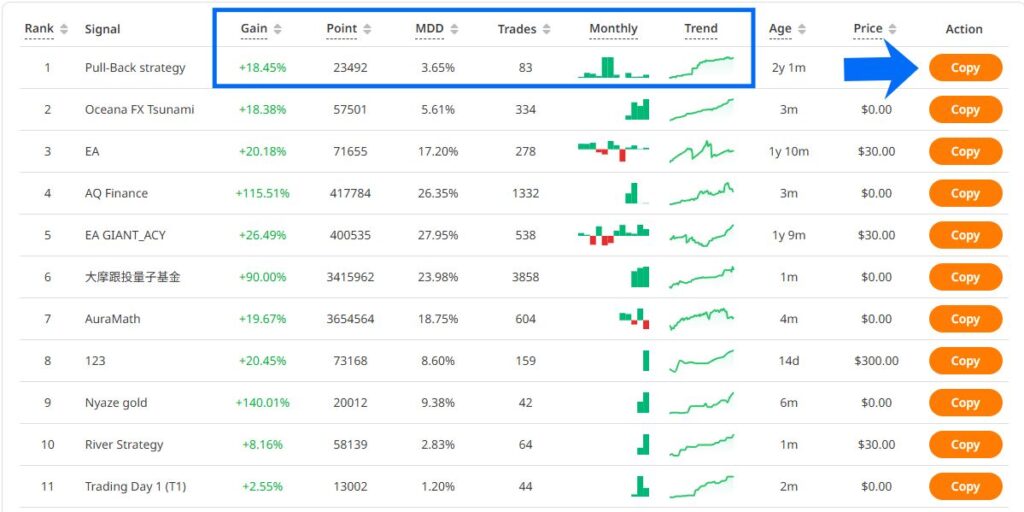
Browse the Signal Provider leaderboard. Before choosing a trader to follow, review their core stats:
• Gain % (TWR): Uses Time-Weighted Return to show true trading performance without distortion from balance deposits or withdrawals.
• Maximum Drawdown (MDD): Shows the largest historical peak-to-trough decline to help you evaluate downside risk.
• MMR & Win Rate: Review their Money Management Rating, winning percentage, and historical equity curve.
• Monthly Fee: Check their required monthly subscription fee displayed directly on their card.
Action: Once you find a provider who fits your risk appetite, click their blue “Copy” button.
Step 3: Choose Your Copy Type (Smart Scaling vs. Exact Copy)
When the copy window appears, select your trade allocation method:
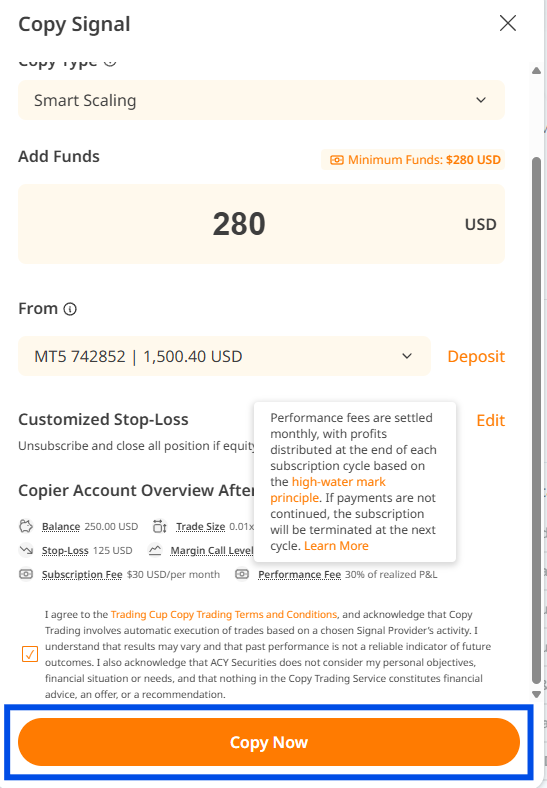
• Smart Scaling (Recommended): Automatically scales copied trade lot sizes in proportion to your account balance relative to the provider’s balance. (Example: If the provider has $3,000 and trades 1.0 lot, your $300 balance automatically copies 0.1 lots).
• Exact Copy: Replicates the exact lot size placed by the provider, regardless of balance differences. (Example: If the provider trades 0.1 lots, your account copies 0.1 lots; requires a larger margin buffer).
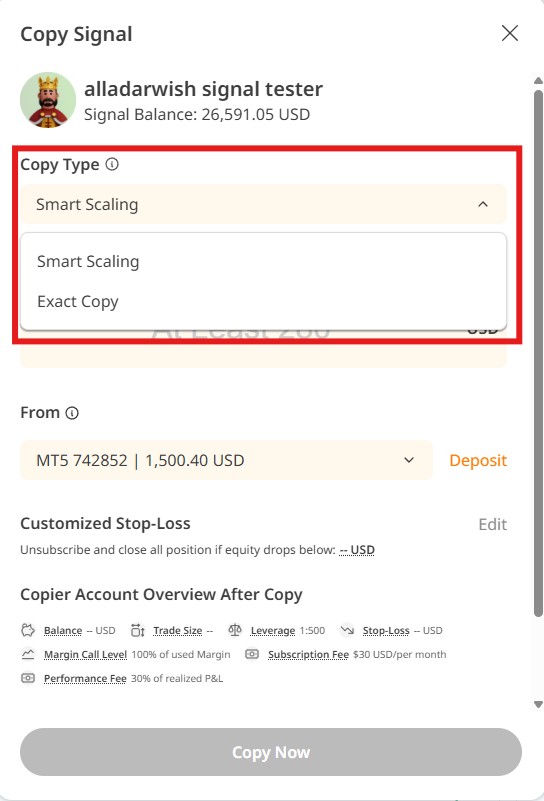
Copier Tip: For starting accounts, choose Smart Scaling to avoid margin pressure.
Step 4: Fund Your Account & Verify Minimum Requirements
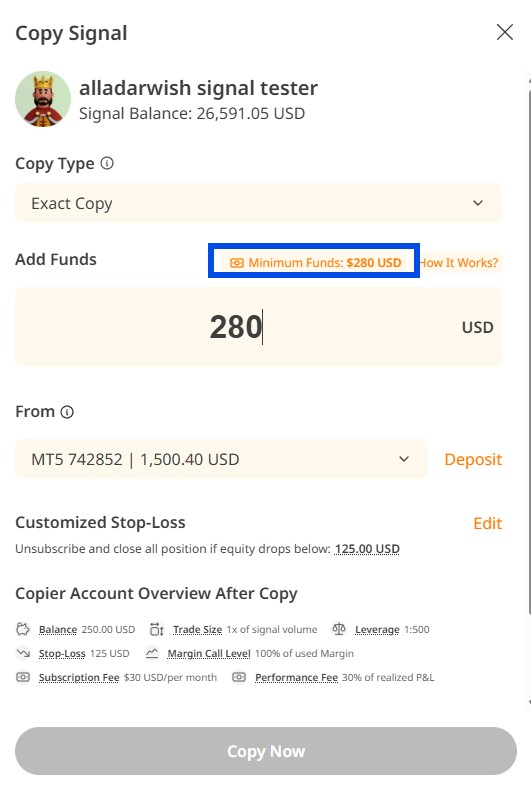
Review the financial requirements shown in the setup screen:
• Minimum Funds: Each provider sets a minimum funding amount. You can deposit more than this minimum, but you cannot proceed below it.
• Monthly Subscription Fee: Deducted upfront from your copier account upon subscribing. (Non-USD accounts are converted using ACY exchange rates).
• Action: Verify that your account has enough available balance to cover both the copy funds and the upfront fee.
Step 5: Set Your Stop Loss & Click ‘Copy Now’
Establish an equity safety net before activating trade replication:
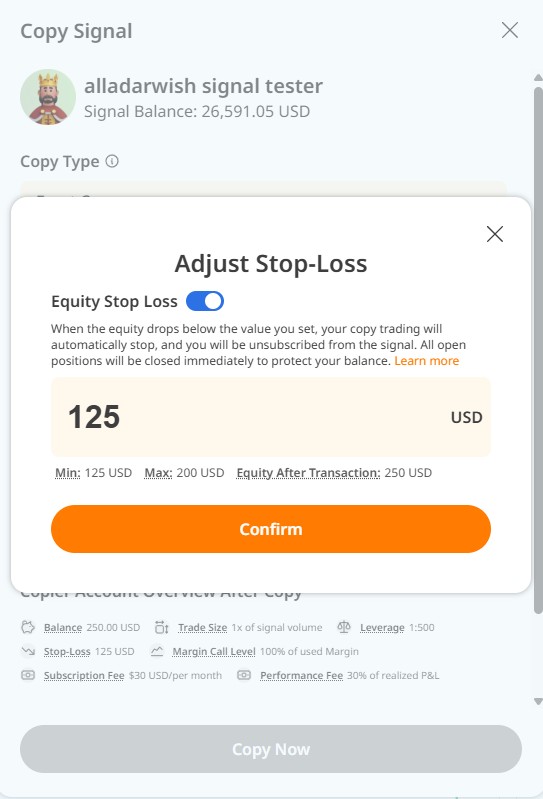
1. Set Account-Level Stop Loss: Tradingcup automatically sets a default Stop Loss at 50% of your account equity, displayed as a concrete dollar value. You can adjust this threshold higher or lower.
2. Automated Protection: If market moves push your equity down to this trigger level, Tradingcup automatically unlinks you from the provider and closes all open copied positions.
3. Launch Copying: Review your settings and click “Copy Now”. A “Copy Success” pop-up will appear immediately confirming trade copying is active.
Post-Copy Portfolio Management: Navigating ‘My Copy Trading’
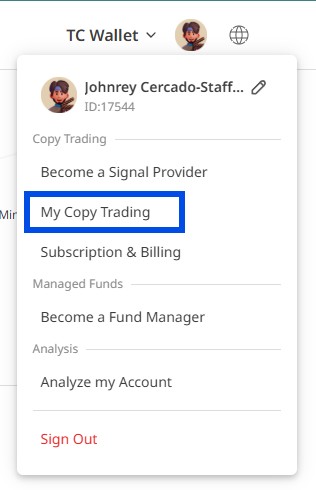
Copy trading is not an unmonitored ‘set-and-forget’ endeavor. To inspect performance and retain operational control, hover over your Profile Icon in the upper right navigation menu and select “My Copy Trading”. This leads to your centralized copy portfolio, structured into three operational hubs:
1. Analyze: Real-Time Performance Analytics
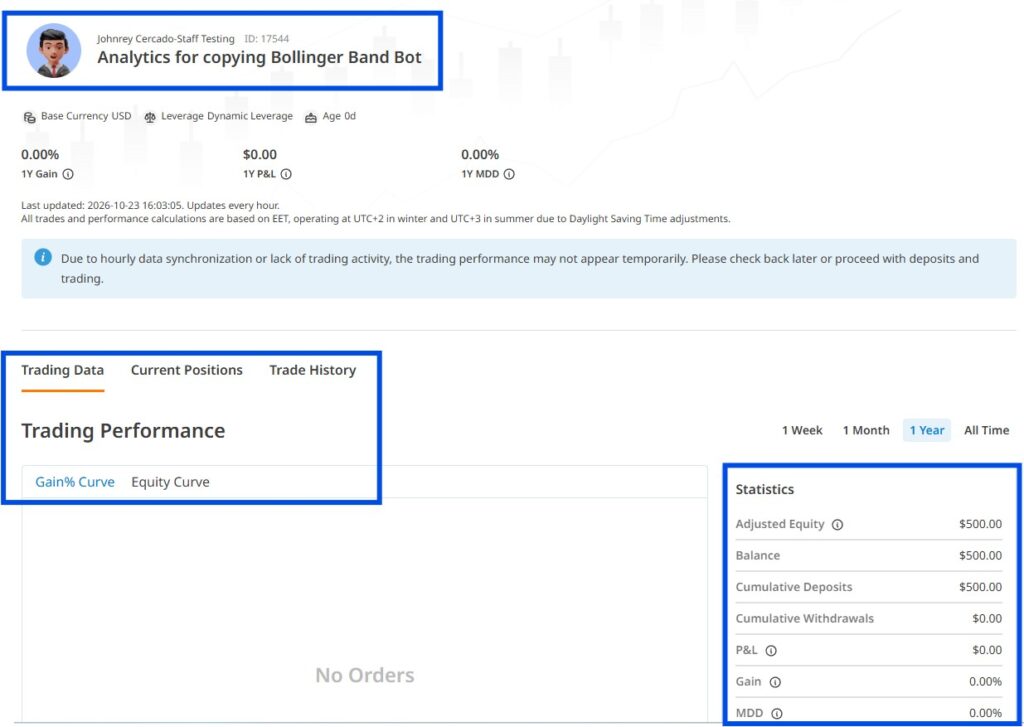
The Analyze tab serves as your command center. It features an equity growth curve, live floating P/L, historical closed trades, win rate ratios, and current open market positions replicated from your provider.
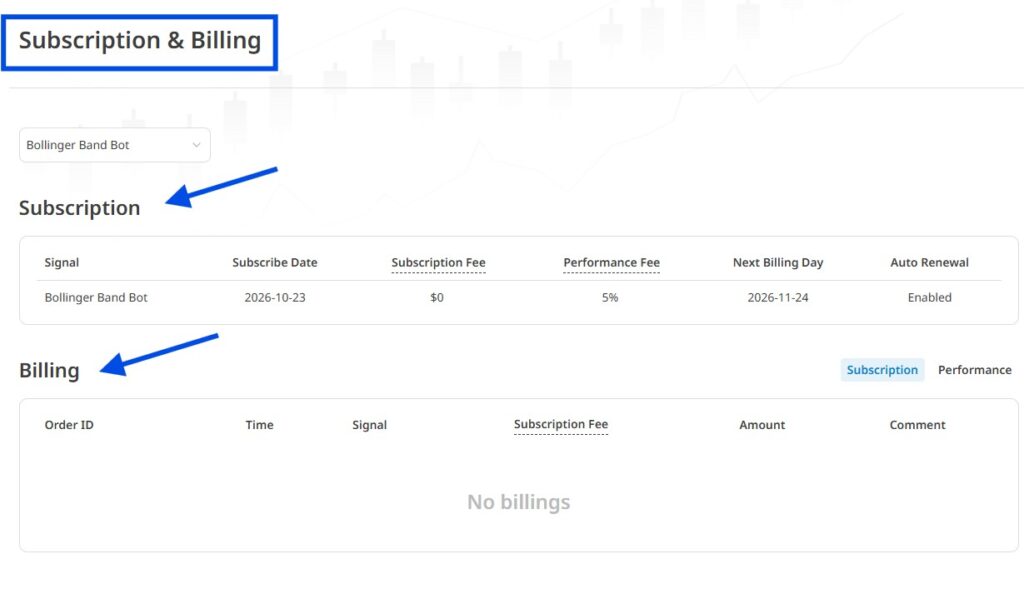
2. Billing: Subscription Schedules & Invoicing
The Billing tab tracks payment dates, transaction history, and recurring billing schedules. Signal Provider subscriptions renew automatically every 30 days unless paused or canceled.
3. Copy Management: Granular Trade Control
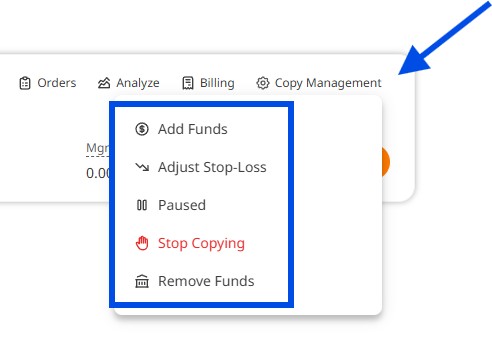
The Copy Management panel contains five vital operational actions:
• Add Funds: Inject additional margin into your active copy allocation to support larger volume or absorb volatility.
• Remove Funds: Withdraw surplus unallocated capital from the copy pool back to your main account wallet.
• Adjust Stop Loss: Recalibrate your equity stop-loss threshold upward as account profits accumulate, locking in gains.
• Pause Copying: Freezes new trade replication immediately. Existing open positions remain open and continue mirroring the Signal Provider’s exit rules. Copiers can resume at any time.
• Stop Copying: Permanently terminates the copy relationship. All existing open trades are closed at market prices instantly, and applicable performance fees or final settlements are processed.
Frequently Asked Questions (FAQ)
How much money do you need to start copy trading?
The starting capital required depends strictly on the Signal Provider you choose. Each provider sets their own Minimum Funds requirement based on their strategy’s margin requirements. Additionally, you must hold sufficient balance to cover the provider’s upfront monthly subscription fee.
What fees do copy traders pay?
Copiers pay an upfront monthly subscription fee established by the Signal Provider. This fee automatically renews every calendar month unless copying is canceled. Depending on the provider’s configuration, performance fees may also apply, calculated and settled when you stop copying or reach defined settlement periods.
What is the difference between pausing and stopping copy trading?
When you ‘Pause Copying’, you remain subscribed to the provider, but no new trade orders are copied. Your existing open positions stay active and will exit when the provider closes them. When you ‘Stop Copying’, your subscription is fully terminated, all open positions are immediately liquidated at current market prices, and final fee settlements take place.
Is copy trading safe, and can you lose money?
Copy trading involves inherent financial risk, particularly when trading leveraged CFDs on volatile assets like Forex, Gold, and Crypto. If the Signal Provider makes poor trading decisions or experiences a prolonged drawdown, your account equity will decline. You can mitigate these risks by using Smart Scaling, setting strict Account-Level Stop Losses, and avoiding providers with excessive historical drawdowns.
Looking for the Best Copy Trading Strategy?
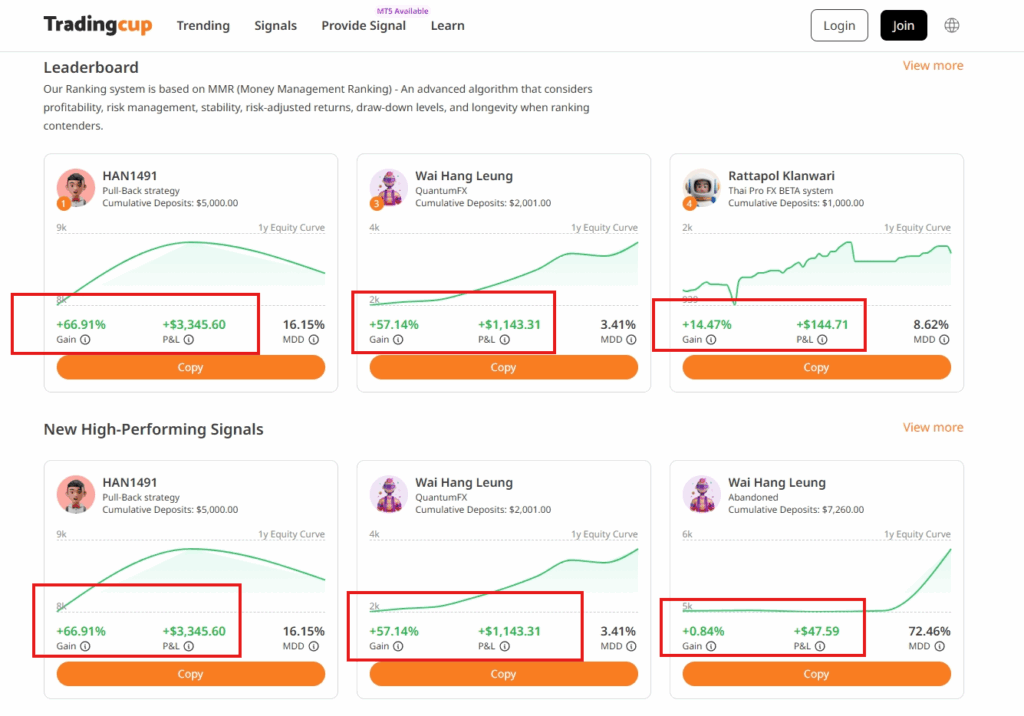
We’ve compiled a leaderboard of the most outstanding traders with excellent drawdown control and clear trading styles. This way, you’ll never feel lost when choosing who to follow and won’t blindly chase trends. Click to view the latest trader rankings and find out who is truly worth copying! Choose the right person, copy the right strategy, and from today, let copy trading truly create value for you.
Bonus Guide
What Makes an Effective Trading Portfolio?
- Diversification: Spread funds across various asset types (e.g., stocks, bonds, real estate, cash, precious metals) and industries/regions to reduce exposure to single-market volatility.
- Asset Allocation: Tailor allocations based on your risk tolerance, goals, and time horizon. Conservative portfolios emphasize fixed income, while aggressive ones lean into equities.
- Risk-Reward Balance: Each asset has different risk/return profiles. Ensure your portfolio avoids excessive exposure to high-risk or low-return assets.
- Low Correlation: Combine assets with correlations below 0.3 to enhance stability and provide a cushioning effect during market swings.
- Dynamic Rebalancing: Review and adjust your portfolio regularly as markets or personal goals change to stay aligned with your risk-return expectations.
- Clear Objectives: Define your financial goals (retirement, housing, education) before designing your strategy and time horizon.
- Discipline & Logic: Stick to your trading plan without emotional decision-making. Regularly reassess assumptions and market conditions.
(Disclaimer: This article is for informational and educational purposes only. It should not be considered financial advice. Always conduct your own research and consult with a qualified financial advisor before making any trading decisions.
For more detailed insights on developing daily trading routines, risk management, and effective position sizing strategies, explore additional articles on Trading Cup. Our trading experts at ACY and FinLogix are also great resources to guide your journey towards trading excellence.

Discover Our Best Trading Signals
At Tradingcup, you can browse through a selection of signals and review past performance before you decide to copy.
Become A Signal Provider
Share your expertise and become a signal provider so other traders can copy your trades.
Stay tuned to our blog for more trader spotlights and leaderboard updates.
Trading involves risks.
Visit the Tradingcup blog through the link below for more updates: https://www.tradingcup.com/learnBest blogs top 8 code to use if needed.
Related Copy Trading blogs:
- Understanding Market Liquidations: Liquidity Sweeps and Runs Explained
- 7 Essential Daily Habits of Successful Traders to Outperform Their Peers
- 10 Strategies You Can Copy off Our Best Copy Traders
- 5 Strategies Every Trader Can Master To Trade Better In A Trading Contest
- 2026 Copy Trading Scams Exposed: How to Spot Fraud
- A Swing Trading Strategy with an 83 Percent Win Rate and Low Drawdowns
- Forex Martingale Strategies Explained, The Good, The Bad and The Ugly
- Pyramiding Trading Tutorial – Pros & Cons & How to Use It