
Easiest Copy Trading Strategy For Forex: Copying 5 Traders

TradingCup
JUN 26 2025
Last Updated: February 25, 2026
This article is reviewed annually to reflect the latest market regulations and trends.
Disclaimer: The information in this article is for educational purposes only and does not constitute financial, investment, or trading advice. Copy trading carries substantial risks, including the potential loss of your entire invested capital. Past performance of copied traders or strategies is not a reliable indicator of future results. You may be replicating high-risk trades, overleveraged positions, or strategies incompatible with your financial goals. Always conduct independent research into a trader’s historical performance, risk metrics, and strategy before copying them. Never invest funds you cannot afford to lose. Consult a licensed financial advisor to ensure copy trading aligns with your risk tolerance, financial objectives, and regulatory requirements in your jurisdiction. This article does not endorse specific traders, platforms, or strategies, and all trading decisions remain your sole responsibility.
TL;DR:
- No time to trade or learn the score? Forex copy trading opens the door.
- Don’t bet on one and face the fall, copy multiple traders to stand up tall.
- Spread your risk, don’t concentrate, a smoother journey you’ll create.
- Use TradingCup’s tools to find your crew, and build a portfolio fresh and new.
- Let compounding work, don’t seek the thrill, patient investing pays the bill.
“It was never my thinking that made the big money for me. It was always my sitting.”
— Jesse Livermore
The Easiest Forex Strategy? A Deep Dive into Copying Multiple Top Traders
Does this sound familiar? You are intelligent, ambitious, and driven. You’ve built a successful career, and now you’re focused on making your money work as hard as you do. You hear about the immense potential of the global foreign exchange (forex) market, a $7.5 trillion-a-day arena, and you see an opportunity for significant wealth generation. But when you look closer, you’re confronted with a seemingly impenetrable fortress.
The walls of this fortress are built with complex charts, esoteric jargon like “pips” and “lots,” and a dizzying array of economic indicators. The time commitment required to learn technical analysis, monitor geopolitical news, and execute trades with precision feels like a second full-time job, one you simply don’t have time for. You are an investor, not a day trader, and the path to entry seems blocked by a steep, time-consuming learning curve.
You may have discovered copy trading as a potential key to this fortress. It promises a way to participate in the markets by leveraging the expertise of seasoned professionals. But with this discovery comes a new set of questions. How do you start? Who do you trust? And what is the most intelligent, efficient, and safest way to begin this journey? This guide provides the answer. It is not a get-rich-quick scheme, but a blueprint for a sophisticated, risk-managed strategy: building a diversified portfolio by copying multiple top forex traders. This is not about being a passive follower; it’s about becoming a strategic portfolio manager, delegating the tactical execution to vetted experts so you can focus on what you do best.
The Blueprint: Your 8-Step Guide to Multi-Trader Copying on TradingCup
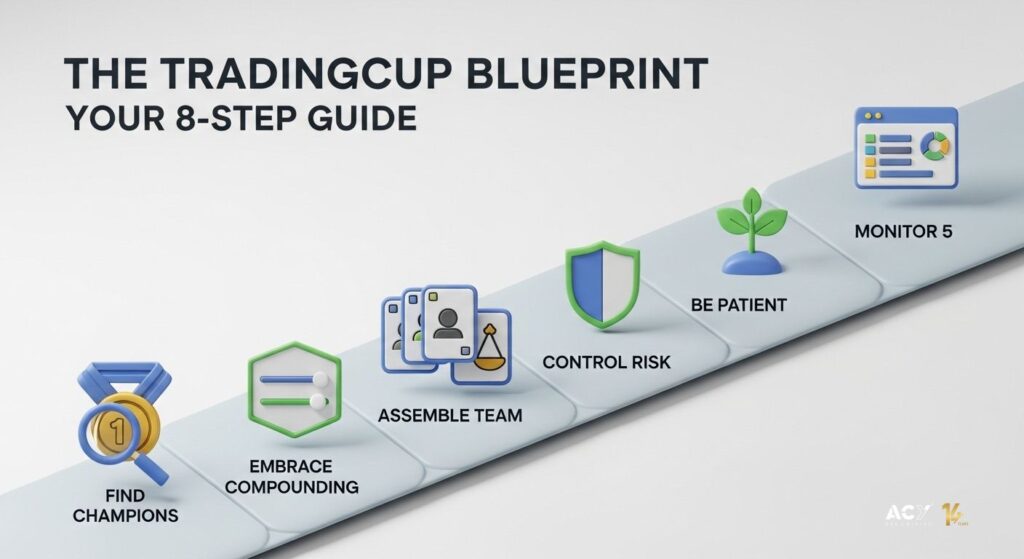
Executing this strategy requires a clear, step-by-step process. The following blueprint is designed specifically for the TradingCup platform, leveraging its unique features to help you build and manage your diversified portfolio intelligently.
Step 1: Find Your Champions with the ‘Trending’ Tab & MMR
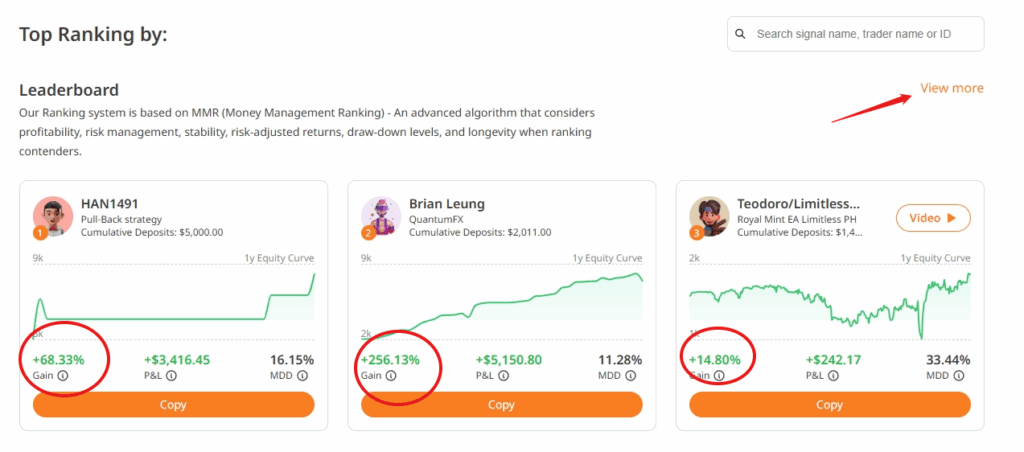
Your first task is to identify potential candidates for your portfolio. Navigate to the Trending tab on TradingCup. This section often features traders who are gaining traction, pre-filtered to help you discover new talent. However, the most powerful tool at your disposal is the Money Management Ranking (MMR) algorithm.
Unlike basic leaderboards that only rank by profit, MMR is a proprietary system that provides a holistic evaluation. It analyzes profitability, risk management practices, strategy stability, historical drawdown levels, and the longevity of a trader’s track record. This helps you identify traders who are not just profitable, but also consistent and risk-aware. For a deeper dive into finding the right traders, you can explore TradingCup’s guide on how to find top traders to copy.
Step 2: Stay Updated on Rising Stars
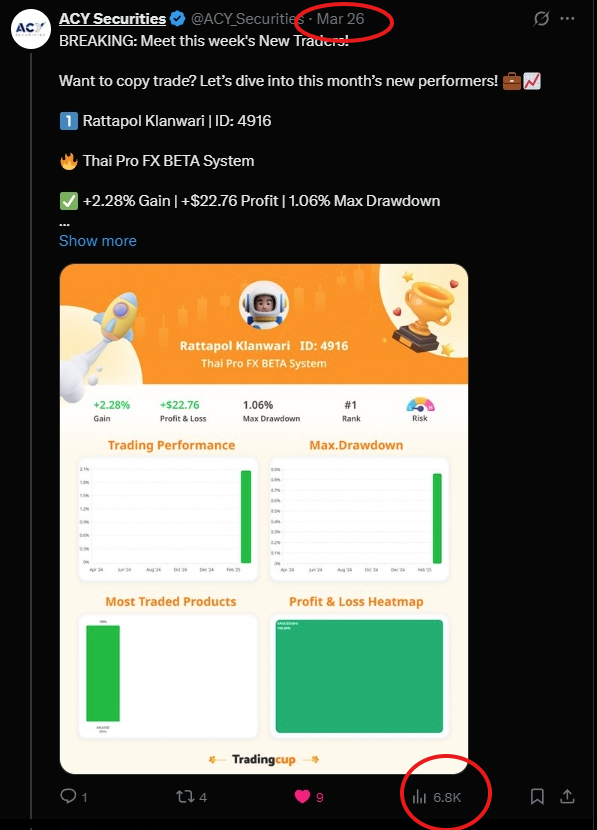
The world of trading is dynamic, and new star performers emerge regularly. A smart portfolio manager keeps an eye out for fresh talent. TradingCup facilitates this by providing weekly updates on Twitter and monthly highlights on their website, showcasing top-performing traders and their strategies. Following these updates can give you an edge in discovering the next great addition to your portfolio. You can find these updates on the X account and through monthly reviews like the most profitable traders review or specialized analysis such as the top Gold traders review.
Step 3: Become a Detective with Advanced Filters
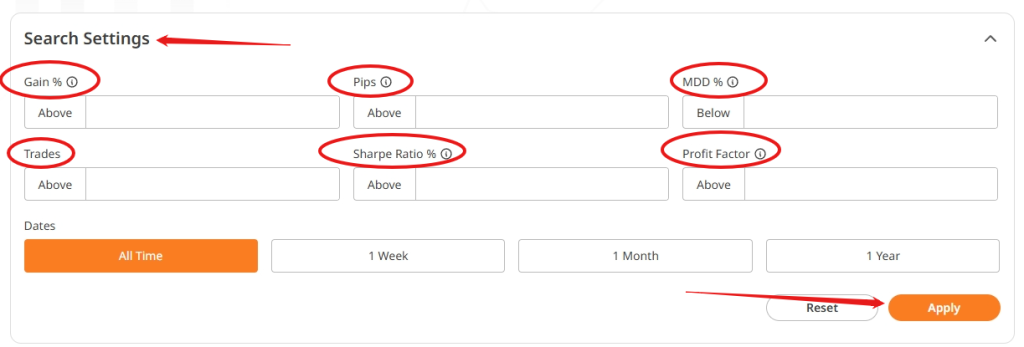
Once you have a list of potential candidates, it’s time to conduct your due diligence. TradingCup’s platform includes advanced search filters that function much like a stock screener for investors. Use these filters to narrow down your choices based on criteria that matter to you.
You can filter by Trades frequency, Gain %, Sharpe ratio, and more. The most critical metric to analyze is the Maximum Drawdown (MDD). This number represents the largest peak-to-trough drop a trader’s account has ever experienced and is the single best indicator of their historical risk profile. Ensure the trader’s MDD aligns with a level of loss you are psychologically and financially prepared to endure. To learn more about these powerful tools, review the guide on understanding search filters.
Step 4: Determine Your Starting Capital
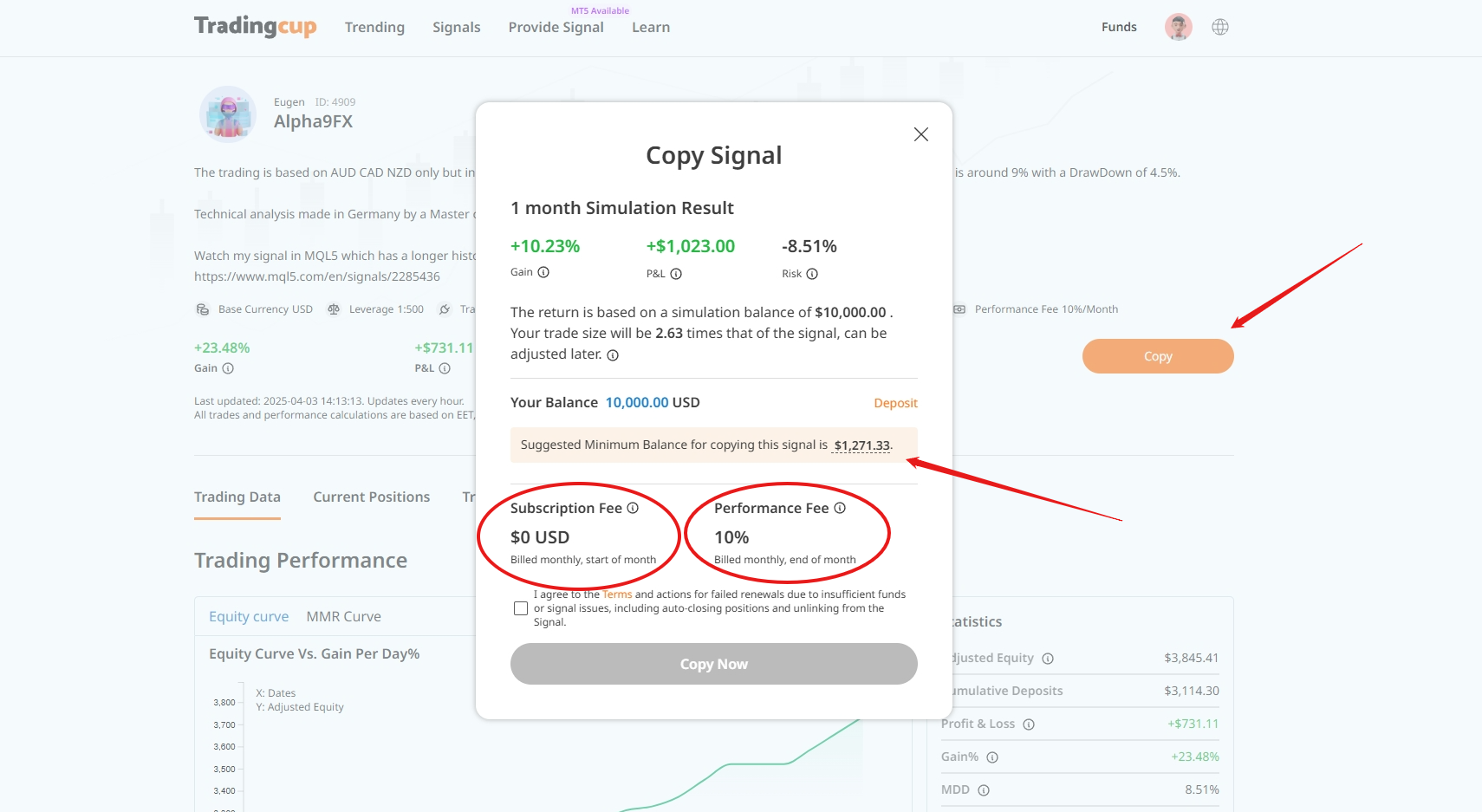
A common question for beginners is, “How much money do I need to start?” The answer is closely tied to the traders you choose to copy. Each Signal Provider on TradingCup will have a suggested minimum balance. It is crucial to start with at least this amount. Allocating less can result in trades not being copied correctly, especially if the provider’s strategy involves trade sizes that are too large for your smaller capital base. Adhering to the suggested balance ensures your account can accurately mirror the provider’s strategy and risk parameters. For more details, refer to the explanation of suggested capital amounts.
Step 5: Master the Multiplier to Fine-Tune Your Risk
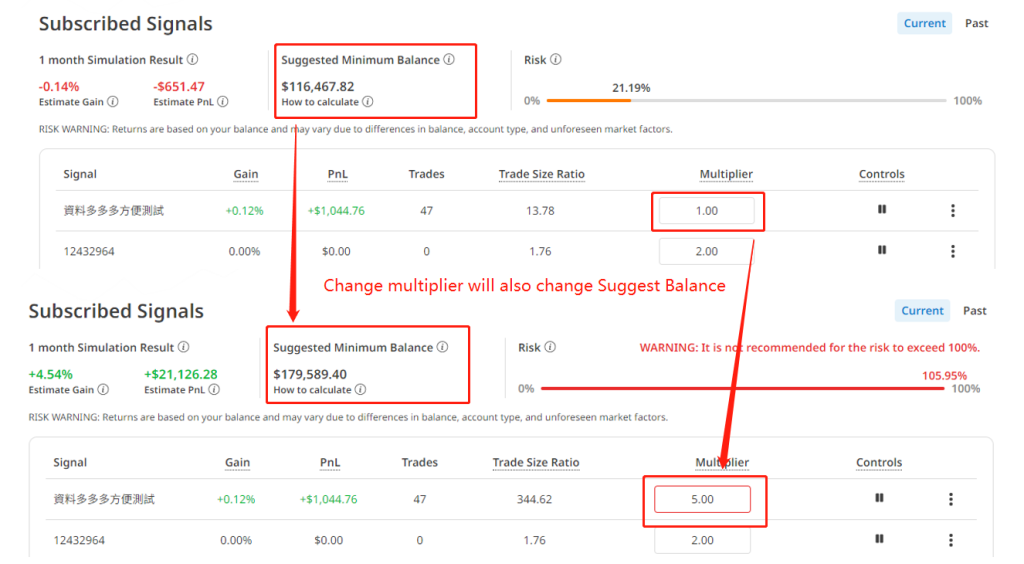
One of the most powerful risk management tools available to a copier is the signal multiplier. This feature gives you a vital layer of personal control over your risk exposure. By default, trades are copied at a 1:1 ratio based on the proportion of your capital to the provider’s.
The multiplier allows you to adjust this. For example, if you find a trader whose strategy you like but whose risk profile is slightly higher than your comfort level, you can set the multiplier to 0.5x. This will copy their trades at half the proportional size, effectively halving your risk. Conversely, if you want to be more aggressive with a particular strategy, you could set it to 2x. Mastering this feature allows you to tailor the risk of each individual trader in your portfolio. A full explanation of this feature can be found in the copy trading multiplier guide.
Step 6: Assemble Your Team & Avoid Common Pitfalls
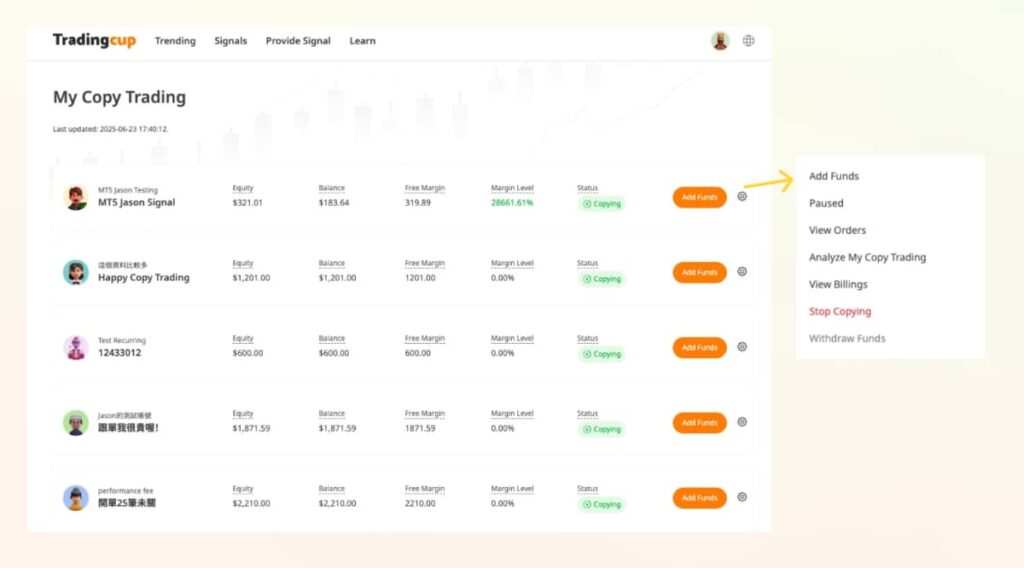
Now it’s time to assemble your team of up to five traders. The goal is diversification, so don’t just pick the top five on the leaderboard. Construct a balanced portfolio.
A sound approach is to start with 3-4 traders who have conservative, long-term track records and low drawdowns. Then, you can add one trader from the “top gainer” group to dip your toes into a higher-risk, higher-reward strategy. This balanced approach helps you learn while managing overall risk. This is also the stage where it’s critical to be aware of common beginner mistakes, such as over-allocating to one trader or chasing short-term returns. For a comprehensive list of what to avoid, consult these copy trading tips for beginners.
Step 7: Embrace ‘Boring’ for Compounding Magic
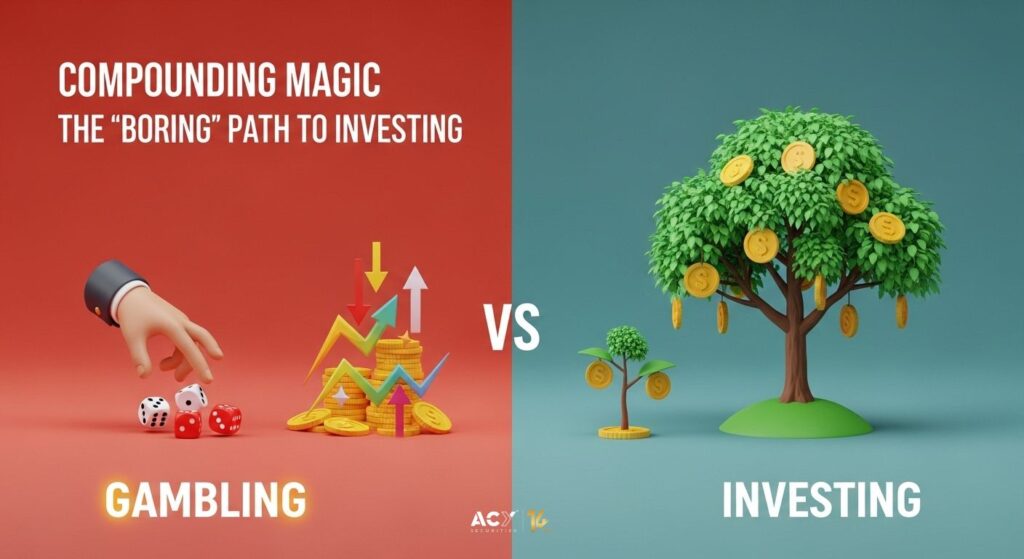
One of the greatest psychological hurdles for new investors is the desire for excitement. But successful, long-term investing is often a disciplined, methodical, and even “boring” process. If you’re seeking the thrill of a casino, the financial markets will gladly take your money. The goal here is not a dopamine rush; it’s the steady, patient magic of compounding returns. By building a diversified portfolio of consistent traders and letting it work over time, you are engaging in a professional investment strategy, not gambling. This mindset shift is crucial for long-term success, and understanding why consistent trading can feel boring is a sign of maturity as an investor.
Step 8: Monitor Your Portfolio
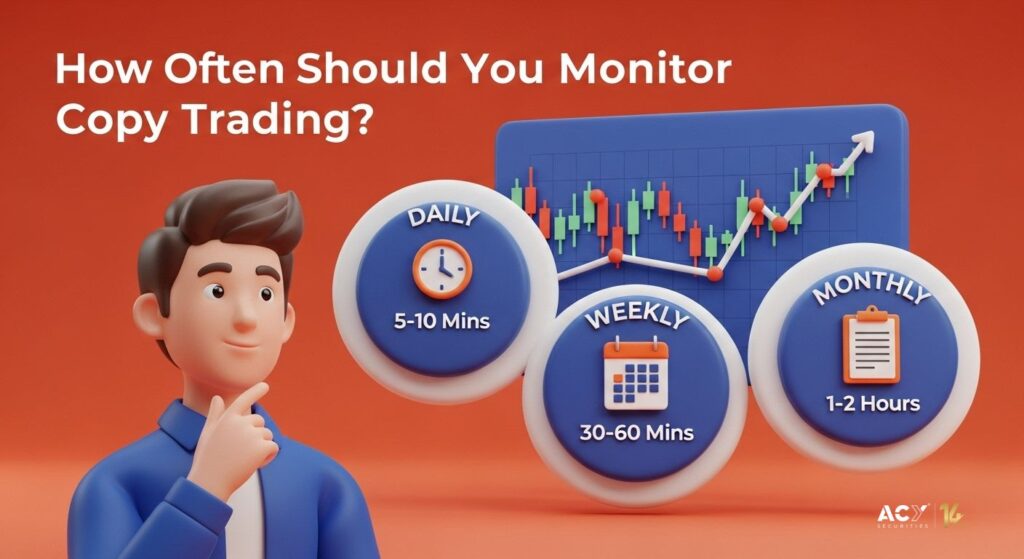
Copy trading is not a “set-and-forget” investment; it’s “set-and-monitor.” Your role as the portfolio manager is to oversee your team of traders. This doesn’t mean checking your phone every five minutes. It means establishing a disciplined routine, perhaps weekly or bi-weekly, to review the performance of your overall portfolio and each trader within it. Are they still adhering to their stated strategy? Has their drawdown exceeded a level you are comfortable with? Be prepared to make executive decisions, which include cutting ties with a provider whose performance has degraded or whose risk profile has changed. You are ultimately responsible for your capital. For guidance on establishing a healthy monitoring rhythm, see the guide on how often to monitor your copy trades.
Why is Copying Just One Trader a High-Stakes Gamble?
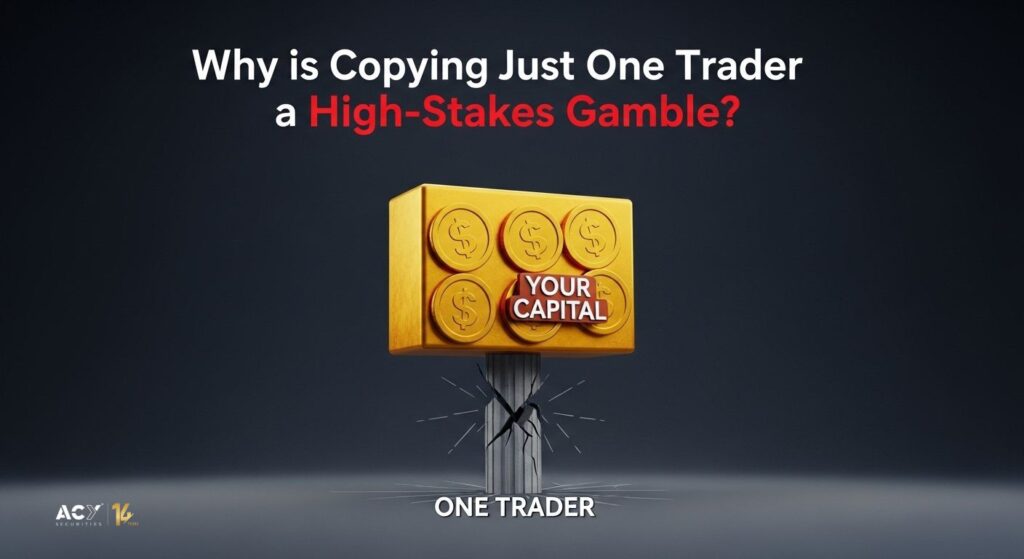
Allocating your entire copy trading capital to a single Signal Provider, no matter how impressive their track record, is akin to betting your entire fortune on a single horse. This approach exposes an investor to a concentrated and dangerous form of risk known as idiosyncratic risk. This is the risk inherent to one specific individual, their unique trading strategy, their psychological biases, their potential for human error, and the chance that their specific market approach may suddenly fall out of favor.
Relying on one person creates a “single point of failure” in your investment portfolio. That star trader could suffer a major loss from a single poor decision, fall prey to emotional trading like the “fear of missing out” (FOMO), or simply endure a prolonged and unexpected losing streak. When that happens, 100% of your allocated capital is exposed to their downturn.
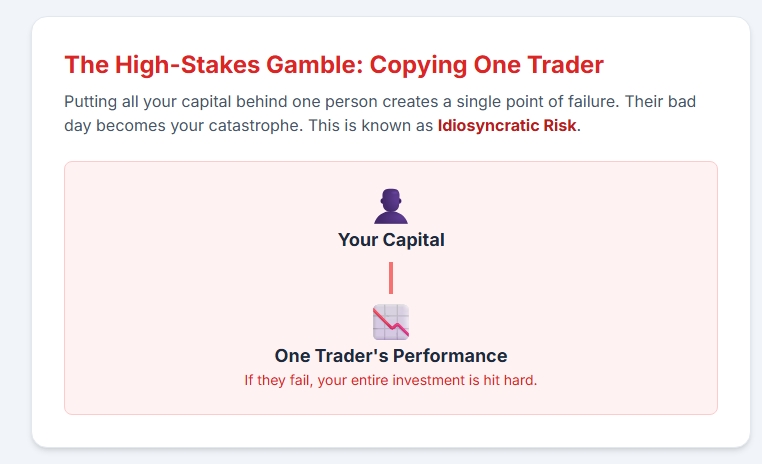
Some platforms may offer simplistic advice, such as “stick to one trusted trader”. While this might seem like a straightforward starting point for an absolute novice, it is fundamentally unsound advice for any serious investor. A more sophisticated approach, and one that is technologically supported by leading platforms, is to recognize this risk and actively mitigate it. The core tenet of modern portfolio theory is that specific, individual risks can be significantly reduced through diversification. This is the foundation of the multi-trader strategy.
The Multi-Trader Strategy: How to Build Your Personal Forex ‘Hedge Fund’
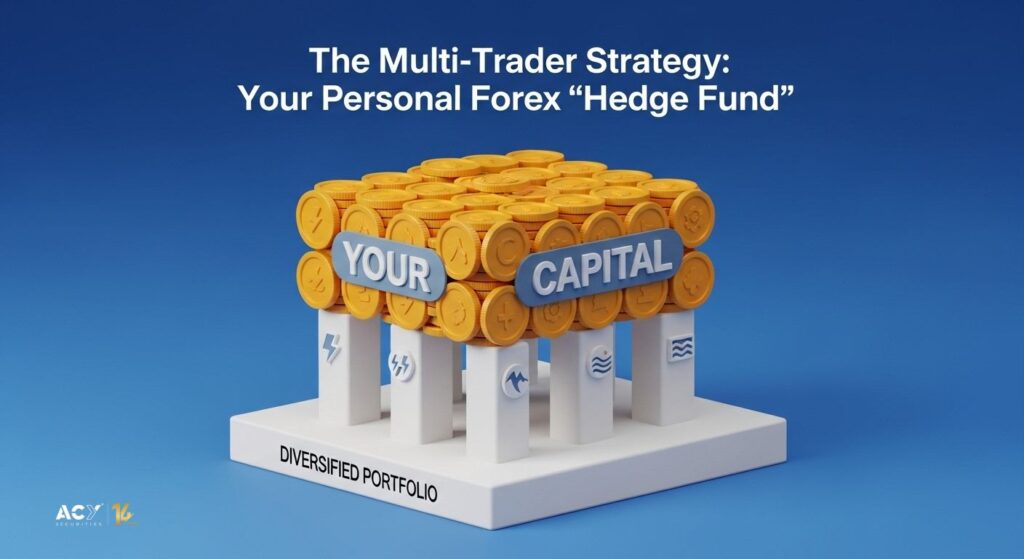
The strategy of copying multiple traders simultaneously, up to five on a platform like TradingCup, is a direct application of the diversification principle. Instead of relying on a single point of failure, you construct a more robust and resilient portfolio, effectively creating your own personal, diversified “fund of funds.” The strategic advantages are profound.
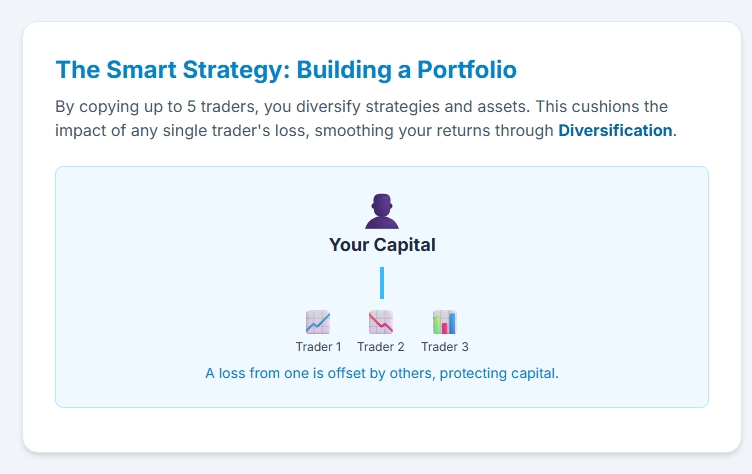
- Strategy and Asset Diversification: A key benefit is the ability to blend different trading methodologies. An investor could allocate capital to a short-term forex scalper, a long-term commodity trend-follower, and an index-based swing trader. This blend ensures the overall portfolio is not dependent on a single market condition. If one trader’s strategy struggles in a choppy, sideways market, another’s may be designed to thrive in that exact environment, smoothing out overall returns. This also provides indirect exposure to a wide array of global asset classes, forex, stocks, indices, and commodities, that an individual might not have the expertise to trade alone.
- Smoothing the Equity Curve: The primary visual representation of an account’s performance is its equity curve. A portfolio diversified across several uncorrelated or loosely correlated traders is likely to exhibit a smoother, more consistent upward-trending equity curve. The inevitable losses from one trader’s strategy can be offset by the gains from another, reducing the overall portfolio’s volatility and the severity of drawdowns.
- Reducing “Single Point of Failure” Risk: This is the most critical risk management benefit. It protects an investor’s capital from the catastrophic failure of a single trader. In a diversified portfolio, the impact of one provider having a terrible month is contained to only a fraction of the total capital, not the entire amount.
The tangible impact of this strategy is best understood through a clear, quantitative example.

The Power of Diversification: A Drawdown Scenario Analysis
Consider a total investment of $1,000. Let’s compare two scenarios: one where the entire amount is allocated to a single, aggressive trader, and another where it is diversified across five traders with different risk profiles. Assume the aggressive trader experiences their historical maximum loss.
| Portfolio Scenario | Trader(s) | Allocation ($) | Performance during Scenario | Impact on Allocation ($) | Total Portfolio Value ($) | Total Portfolio Drawdown (%) |
| Concentrated | Trader 2 Only | $1,000 | Hits -30% MDD | -$300.00 | $700.00 | -30.0% |
| Diversified | Trader 1 | $200 | -5% Drawdown | -$10.00 | $190.00 | |
| Trader 2 | $200 | Hits -30% MDD | -$60.00 | $140.00 | ||
| Trader 3 | $200 | +2% Gain | +$4.00 | $204.00 | ||
| Trader 4 | $200 | Flat (0% change) | $0.00 | $200.00 | ||
| Trader 5 | $200 | -10% Drawdown | -$20.00 | $180.00 | ||
| Total Diversified | All 5 Traders | $1,000 | – | -$86.00 | $914.00 | -8.6% |
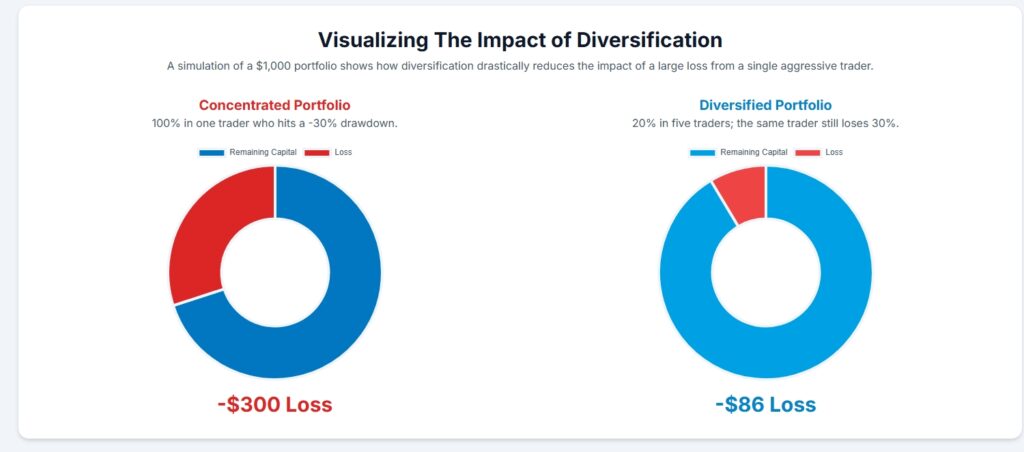
Data adapted from the quantitative analysis in a strategic evaluation of multi-signal copy trading.
This comparison starkly illustrates the core benefit. In the concentrated portfolio, the 30% drawdown from the single trader results in a $300 loss on the entire investment. In the diversified portfolio, the same severe drawdown occurs, but its impact is contained to its $200 allocation, a loss of just $60. The positive and stable performance of the other traders cushions this blow, resulting in a total portfolio drawdown of only 8.6%, or $86. This demonstrates how diversification can dramatically reduce portfolio volatility and protect capital from the failure of any single strategy.
How Would Jesse Livermore Approach Copy Trading?

The legendary speculator Jesse Livermore, who famously made and lost fortunes in the early 20th century, operated long before the advent of copy trading. However, his timeless principles on market speculation, psychology, and money management provide a powerful mental framework for any modern investor looking to implement a multi-trader strategy intelligently. Applying his wisdom elevates the process from simple imitation to a disciplined, strategic endeavor.
Trade the “Leading Stocks” (Copy the Leading Traders)
Livermore’s strategy was to identify and trade the leading stocks in the strongest sectors. He believed that’s where the real action and profit were. Translated to copy trading, this means focusing on the true “market leaders” among Signal Providers. This isn’t just about finding who has the highest percentage gain this month. It’s about using sophisticated tools like TradingCup’s MMR to identify traders who demonstrate leadership through consistency, stability, and superior risk-adjusted returns over the long term. A true leader has a smooth, upward-trending equity curve, not a volatile, lottery-ticket-style one.
Master Patience and Timing
“Do not trade every day of every year,” Livermore famously warned. He believed the big money was made not in constant activity, but in “sitting tight” and waiting for the high-probability setups. For a copy trader, this means resisting the urge to be constantly copying someone. There is no rule that says you must always have five active signals. It is far better to have three excellent, well-vetted traders than five mediocre ones. Patience is required to wait for a Signal Provider who truly meets your strict criteria to emerge. The over-trading of others lays the foundation for your future profits.
Enforce Ruthless Money Management & Cut Losses
Livermore’s most enduring lesson was his approach to risk. “I must fear that my loss may develop into a much bigger loss,” he stated, “and hope that my profit may become a big profit”. He had a personal rule of never risking more than 10% on any single trade and always establishing a stop loss before entering.
For the copy trader, this translates into two actions:
- Define Your Stop Loss: Before copying any trader, define the maximum drawdown you are willing to tolerate from them. If their performance exceeds this pre-defined limit, you must cut them from your portfolio without hesitation.
- Never Average Losses: Livermore considered it “foolhardy” to make a second trade if the first showed a loss. In copy trading, this means you should never add more capital to a Signal Provider who is in a deep drawdown, hoping they will “turn it around.” This is becoming an “involuntary investor,” and it is a path to ruin. Cut the loss, preserve your capital, and re-deploy it to a winning trader.
Keep Cash in Reserve
Livermore believed that “cash is king”. A trader without cash is out of the game. He fought the urge to be constantly in a position because he knew that tying up all his capital meant he couldn’t act when a truly great opportunity presented itself. For the multi-trader portfolio manager, this means not allocating 100% of your investment capital to copy trading. By keeping a portion of your funds in cash, you maintain the strategic flexibility and financial firepower to add a new, exceptional Signal Provider to your team when one appears on your radar.
10 Lessons from ‘Way of the Turtle’ for the Modern Copy Trader
In the early 1980s, a legendary experiment took place. Famed commodities trader Richard Dennis made a bet with his partner, William Eckhardt, that great traders could be “made,” not just “born.” He recruited a group of 23 ordinary people, taught them a complete, mechanical trading system, and funded them with his own money. They became known as the “Turtles,” and they went on to earn over $100 million.
The book Way of the Turtle, written by the most successful Turtle, Curtis Faith, details the principles behind their success. These lessons are directly applicable to the multi-trader copy strategy, as it is, in essence, a form of decentralized, human-powered systems trading. Your “system” is your diversified portfolio of traders and the rules you use to manage it.
- Traders Are Made, Not Born: This is the core premise of the Turtle experiment and copy trading itself. You don’t need to be a Wall Street genius; you can succeed by leveraging a proven process and the expertise of others.
- The Power of a Proven System: The Turtles were given a clear, objective set of rules that removed emotional decision-making. Your “system” is your diversified portfolio and your rules for selecting, monitoring, and removing traders. Trust the process, not your gut feelings during a drawdown.
- Edge Without Discipline is Worthless: The Turtles who failed were not those who didn’t understand the rules, but those who couldn’t follow them under pressure. A copy trader who panics and deviates from their plan, for instance, by stopping a good trader during a normal drawdown or chasing a risky one not in their plan, is destined to fail.
- Manage Risk Above All Else: The Turtles had strict, volatility-based position sizing rules to normalize risk across different markets. Your primary risk management tools are selecting traders based on their low Maximum Drawdown (MDD) and using the Multiplier feature on TradingCup to fine-tune your exposure.
- Think in Terms of Probability, Not Certainty: A system with a positive expectancy will still have many losing trades. This is normal variance. Likewise, a well-diversified portfolio will have traders who are losing at any given time. This is not a sign of failure. Do not abandon the entire strategy because one component is temporarily underperforming.
- Simple Rules Work, If You Stick to Them: The Turtle systems were not overly complex; they were based on breakouts and trend-following logic. The consistency in execution made all the difference. Your trader selection criteria don’t need to be esoteric. Simple rules (e.g., MDD<20%, trading history > 1 year, positive MMR) that are consistently applied are incredibly powerful.
- Know Your Drawdowns: The book places enormous emphasis on understanding and psychologically preparing for drawdowns. This directly reinforces the critical importance of analyzing a trader’s MDD metric before you commit a single dollar. You must be prepared to endure their worst historical loss, and potentially more.
- Diversify to Limit Risk: The Turtles were taught to trade a diversified basket of uncorrelated markets. You are copying a diversified basket of uncorrelated traders. The principle is identical: spreading risk prevents any single event from wiping you out.
- Follow the Trend: The Turtles were trend followers. In the context of copy trading, this means finding Signal Providers who exhibit a consistent, long-term, upward-trending equity curve. You are looking for a history of disciplined success, not a few lucky, volatile wins.
- Why Some Turtles Succeeded More Than Others: Even though every Turtle was given the exact same set of rules, some were vastly more successful than others. The differentiator was not intelligence, but psychology and discipline. This is the ultimate lesson for the copy trader: your long-term success will depend less on finding a “perfect” trader and more on your own discipline in choosing wisely and sticking to your well-defined plan.
Why is TradingCup the Professional’s Choice for This Strategy?
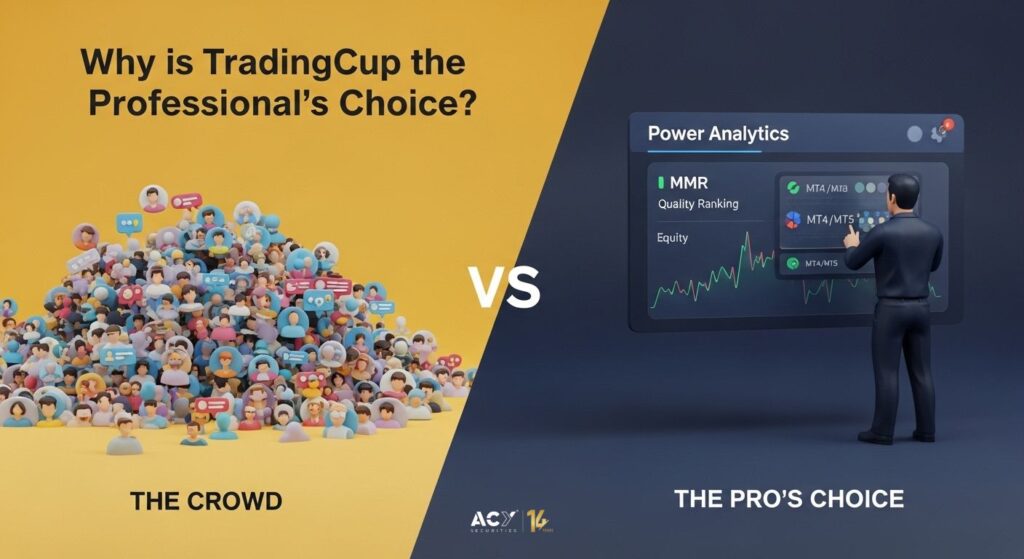
Choosing the right platform is as important as choosing the right traders. While many platforms offer copy trading, TradingCup is uniquely positioned as the professional’s choice for executing the multi-trader strategy due to its focus on curated quality, sophisticated analytics, and professional-grade tools.
This focus aligns perfectly with the routine of a professional day trader, which involves three key phases: pre-market preparation, focused execution, and post-trade review. TradingCup’s features support this disciplined approach. The MMR algorithm and advanced filters facilitate rigorous pre-trade analysis. The automated execution handles the “focused trading” phase efficiently. The detailed performance dashboards enable a thorough post-trade review of your portfolio.
- A Curated Talent Pool: TradingCup’s origin as a high-stakes, global live trading competition is a key differentiator. This legacy implies that its foundational pool of Signal Providers is not just a random crowd, but a group of individuals who have proven their skills under intense pressure. This provides a potential quality filter that is absent on many other platforms.
- Sophisticated Ranking (MMR): The Money Manager Ranking (MMR) algorithm moves beyond the gamified leaderboards of other platforms that often prioritize flashy, high-risk returns. By incorporating stability, longevity, and risk management into its rankings, the MMR provides a more mature and reliable tool for serious investors looking for sustainable performance.
- Professional-Grade Tools (MT4/MT5): The integration with the industry-standard MetaTrader 4 and MetaTrader 5 platforms is a significant advantage. This gives users access to the powerful charting tools and analytical capabilities that professional traders use daily. It also opens the door for sophisticated algorithmic strategies (Expert Advisors) to be offered as signals, expanding the universe of available systems.
- The Superior eToro Alternative: When considering alternatives, eToro is often the first name that comes to mind due to its massive marketing presence and large social community. While eToro excels at accessibility for absolute beginners, TradingCup positions itself as the superior choice for the discerning investor who is ready to move beyond the social noise. The trade-off is clear: eToro offers a vast, unvetted crowd; TradingCup offers a curated team of champions. For an investor focused on quality, risk analysis, and professional tools, TradingCup emerges as the more robust platform
Trading Contests: Forging Champions, Building Trust
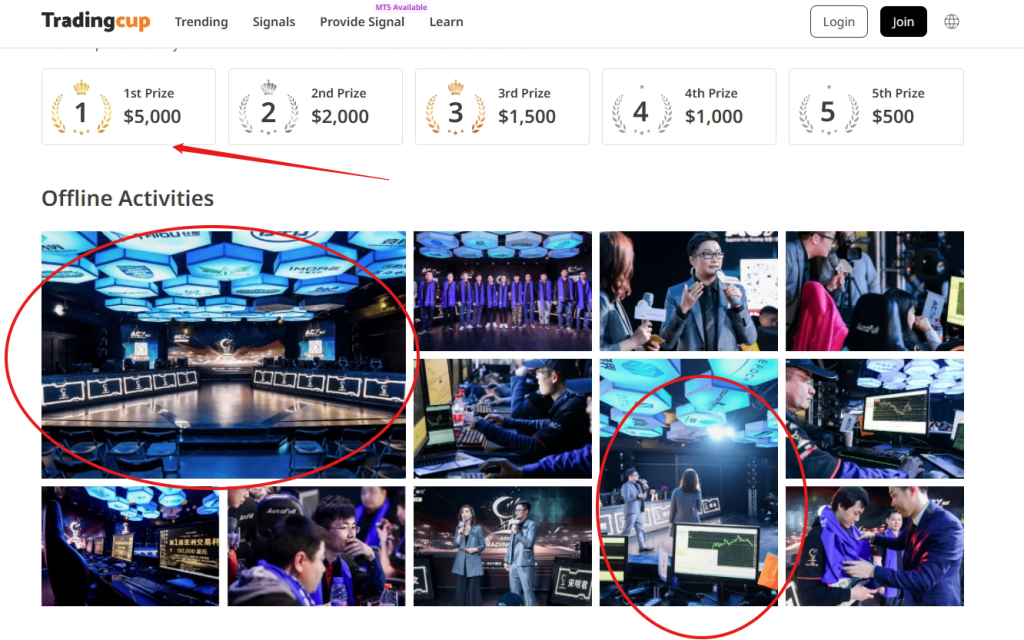
TradingCup has a history of hosting trading competitions (e.g., 2018 Champions, 2019 Champions, 2020 Qualifiers). These contests are more than just showcases; they are:
- A Proving Ground: They rigorously test traders’ skills and strategies under real market conditions.
- A Source of Vetted Talent: Winners and top performers often become sought-after signal providers on the platform. Their strategies have been analyzed using metrics like Sharpe ratios and equity curves. For example, past winners like Thai Pro FX achieved a +13.63% gain with an MDD of 8.62%.
- Transparency in Action: These contests showcase patterns of expertise and resilience, reinforcing the platform’s commitment to reliability. Participants achieving win rates over 90% have been recognized.
This combination of a strong brokerage partner and a history of identifying talent through transparent competitions enhances TradingCup’s credibility and value proposition.
Cross-Referencing with Other Analysts: The ACY Securities Example

Leverage the insights of other market professionals. For example, ACY Securities (the brokerage often associated with TradingCup) features analysis from experts like Jasper Osita and Luca Santos. Following their market commentary (often available via articles, webinars, or potentially their own communication channels like Discord or Telegram – check the links provided by the user:
Jasper’s Discord and Luca’s Telegram can provide valuable context.
Does their analysis align with, contradict, or complement the views of the trader you’re copying? Seeing different perspectives helps you form a more robust understanding of market dynamics and potential scenarios.
Addressing the Skeptics: A Frank Look at Fees, Risks, and Reality
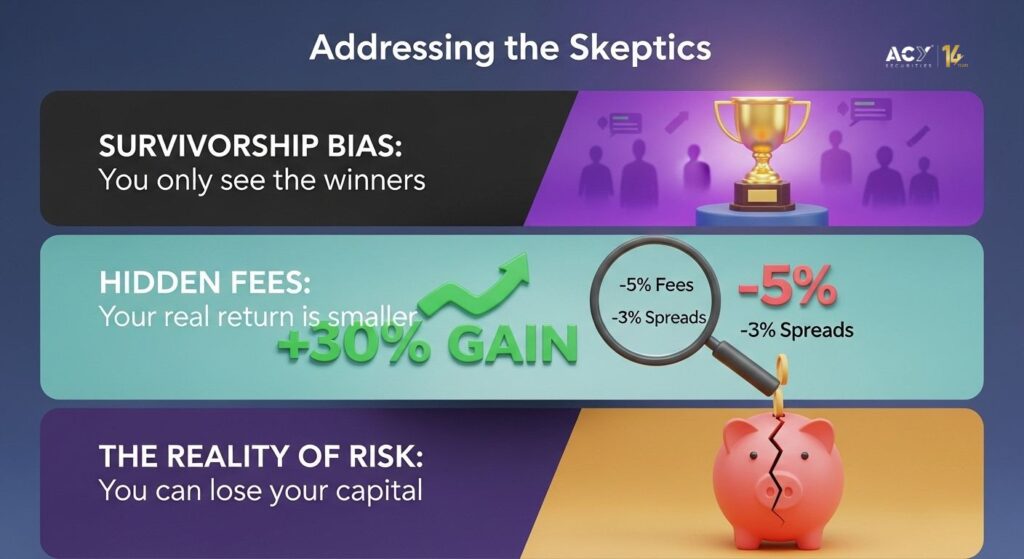
No expert analysis would be complete without addressing the valid concerns and skepticism surrounding copy trading. A quick search on forums like Reddit reveals a healthy dose of cynicism, which often stems from legitimate issues on lesser platforms. Building trust requires confronting these issues head-on.
- The “Survivorship Bias” Problem: Skeptics correctly point out that platforms often showcase traders who simply got lucky in the short term, a phenomenon known as survivorship bias. Past performance is indeed not a guarantee of future results. A smart investor mitigates this by using the tools available on TradingCup. By filtering for traders with a long track record (e.g., >1 year) and analyzing the MMR which factors in longevity and stability, one can move beyond the “flavor of the month” and identify traders with more durable strategies.
- Hidden Fees & Misaligned Incentives: Another common complaint involves hidden fees and providers who “churn” trades (trade excessively) to generate commissions or spread revenue for the broker. Transparency is the antidote. The fee structure on TradingCup has two layers: direct fees paid to the Signal Provider (subscription and/or performance fees) and indirect costs paid to the broker (spreads and commissions on each trade). While this makes the total cost less simple than a single advertised number, it is transparent. An investor can manage this by reviewing a provider’s trading frequency. Choosing providers with swing or position trading strategies, rather than high-frequency scalpers, naturally reduces the impact of trading costs.
- The Unavoidable Reality of Risk: It must be stated unequivocally: copy trading is not risk-free. It is a highly speculative activity, and you can incur significant losses, potentially including your entire invested capital. Any platform or provider promising guaranteed profits is deceptive. The goal of the multi-trader strategy is not to eliminate risk, but to manage it intelligently, mitigate catastrophic single-trader failure, and tilt the probabilities of long-term success in your favor.
Conclusion: Your Journey from Novice to Portfolio Manager Starts Now
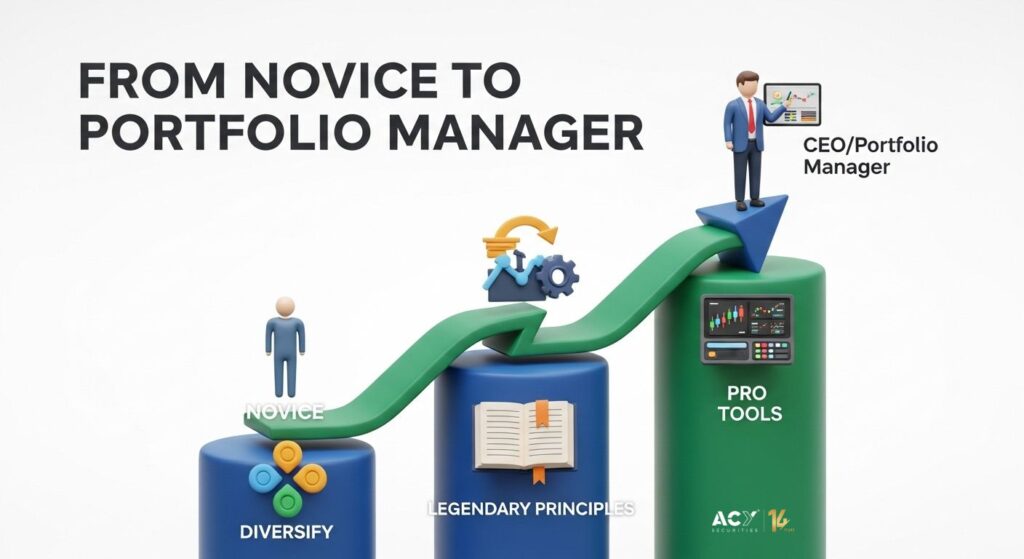
The path into the world of forex trading no longer needs to be blocked by a lack of time or a fear of complexity. The multi-trader copy trading strategy offers a sophisticated, efficient, and risk-managed solution for the modern investor. It transforms the challenge of market participation into an opportunity for strategic delegation.
By diversifying across a carefully selected team of up to five expert traders, you mitigate the dangerous idiosyncratic risk of relying on a single individual. By applying the timeless wisdom of trading legends like Jesse Livermore and the systematic principles of the Turtles, you elevate your approach from simple imitation to a disciplined investment process. And by leveraging the professional-grade tools, curated talent, and sophisticated analytics of a platform like TradingCup, you create an environment built for sustainable success.
This journey is about a fundamental shift in perspective. You are not merely a “copier.” You are the CEO of your own personal hedge fund. You conduct the due diligence, you select the talent, you allocate the capital, and you monitor the performance. The tactical, day-to-day execution is delegated, freeing you to focus on the strategic big picture. Your journey from novice investor to savvy portfolio manager starts with the first, well-researched step.
Frequently Asked Questions (FAQ)
Is copy trading actually profitable for beginners in 2026?
Yes, copy trading can be profitable for beginners, but it is not a guarantee. Profitability depends on several factors: choosing a regulated platform, conducting thorough due diligence on traders, diversifying across multiple signal providers to manage risk, and maintaining a disciplined, long-term perspective. Success in 2026 relies on avoiding common pitfalls like chasing short-term gains and understanding that all trading involves risk.
How is copying multiple traders safer than copying just one?
Copying multiple traders is safer due to the principle of diversification. Allocating all capital to one trader exposes you to their idiosyncratic risk—their specific strategy might fail, or they could make a major error. By spreading your investment across several traders with different strategies and market focuses, the poor performance of one trader is cushioned by the others, leading to a smoother equity curve and significantly reducing the risk of a catastrophic loss from a single point of failure.
What is the absolute minimum I need to start copy trading on TradingCup?
There is no single platform-wide minimum, as the ideal starting capital is determined by the Signal Providers you choose to copy. Each provider has a “Suggested Minimum Balance” listed on their profile. It is highly recommended to meet this minimum for each trader you copy to ensure that your account can accurately replicate their trading proportions and that trades are not missed due to insufficient capital.
Can I lose all my money with copy trading?
Yes. Copy trading is a high-risk activity, and it is possible to lose your entire invested capital. Past performance of a trader is not indicative of future results, and market conditions can change unexpectedly. It is crucial to only invest money you can afford to lose and to use risk management tools like diversification and the signal multiplier to control your exposure.
How is TradingCup different from eToro for forex copy trading?
The primary difference lies in their core focus. eToro is a massive social trading network that emphasizes community interaction and ease of use for absolute beginners. TradingCup, while also user-friendly, positions itself as a more professional platform by focusing on a curated pool of high-quality traders (many from its history as a trading competition), a sophisticated MMR ranking algorithm for deeper analysis, and integration with professional-grade MT4/MT5 platforms. The choice is between eToro’s vast social crowd and TradingCup’s curated team of champions.
What is the most important metric to look at when choosing a trader to copy?
While total gain is eye-catching, the single most important risk metric is the Maximum Drawdown (MDD). The MDD shows the largest percentage loss a trader’s account has suffered from a peak to a trough. It is the best historical indicator of how much you could stand to lose with that trader’s strategy and is essential for aligning their risk profile with your personal comfort level.
Do I need to monitor my trades every day?
No, daily monitoring is generally not necessary and can lead to emotional decision-making. Copy trading is a “set-and-monitor” strategy, not a “set-and-forget” one. A disciplined routine of reviewing your portfolio’s performance on a weekly or bi-weekly basis is sufficient. This allows you to track progress, ensure traders are sticking to their strategies, and make informed decisions about your portfolio composition without reacting to every minor market fluctuation. Sources used in the report
(Disclaimer: This article is for informational and educational purposes only. It should not be considered financial advice. Always conduct your own research and consult with a qualified financial advisor before making any investment decisions.)
For more detailed insights on developing daily trading routines, risk management, and effective position sizing strategies, explore additional articles on Trading Cup. Our trading experts at ACY and FinLogix are also great resources to guide your journey towards trading excellence.

Discover Our Best Trading Signals
At Tradingcup, you can browse through a selection of signals and review past performance before you decide to copy.
Become A Signal Provider
Share your expertise and become a signal provider so other traders can copy your trades.
Stay tuned to our blog for more trader spotlights and leaderboard updates.
Trading involves risks.
Visit the Tradingcup blog through the link below for more updates: https://www.tradingcup.com/learn
Related Copy Trading blogs:
- Understanding Market Liquidations: Liquidity Sweeps and Runs Explained
- 7 Essential Daily Habits of Successful Traders to Outperform Their Peers
- 10 Strategies You Can Copy off Our Best Copy Traders
- 5 Strategies Every Trader Can Master To Trade Better In A Trading Contest
- 2025 Copy Trading Scams Exposed: How to Spot Fraud
- A Swing Trading Strategy with an 83 Percent Win Rate and Low Drawdowns
- Forex Martingale Strategies Explained, The Good, The Bad and The Ugly
- Pyramiding Trading Tutorial – Pros & Cons & How to Use It