
Raking in 45% Returns in 38 Days with a Maximum Drawdown of Only 5.3%! An In-Depth Breakdown of Gold Profit Code

Gary Hsieh
SEP 01 2026
TL;DR
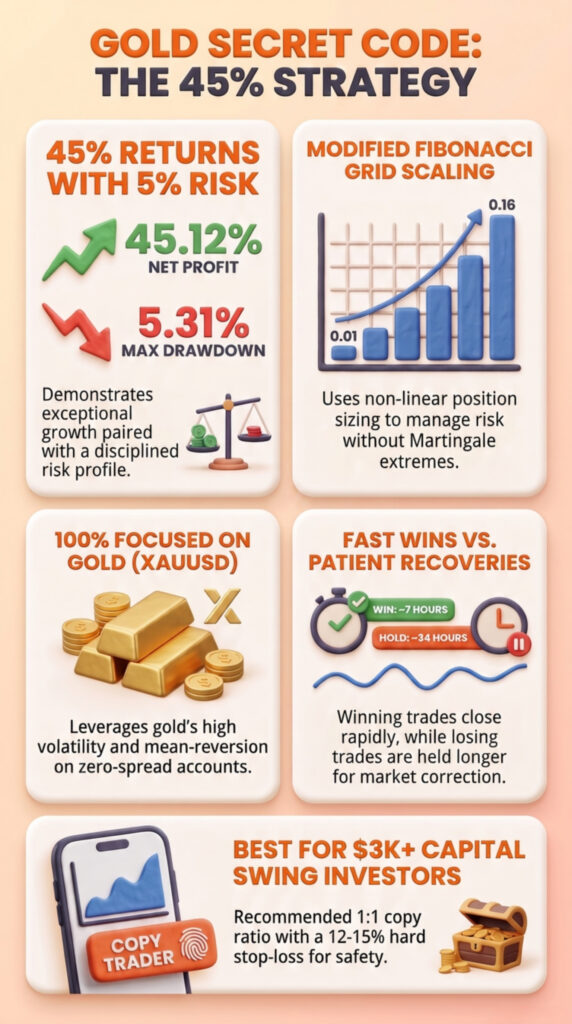
- High Return, Low Risk: Xuemei Zhang / 雪梅 张 Achieved a 45.12% net profit in 38 days with a remarkably low maximum drawdown of only 5.31%.
- 100% Gold Focus: Operates solely on a gold zero-spread account (XAUUSDzero) to capture high volatility and mean reversion while keeping trading costs minimal.
- Disciplined Fibonacci Grid: Scales trades using a strict 0.01 to 0.16 lot ladder (rather than a risky Martingale system), keeping margin utilization under 2% to prevent account wipeouts.
- Simultaneous Exit: Closes all active orders in the exact same second once the collective basket profit turns positive, using heavier pullback trades to cover minor early losses.
- Investor Setup: Recommended for copy-traders starting with $3,000 to $5,000 and using a hard stop-loss of 12% to 15% for safety.
Disclaimer: The information in this article is for educational purposes only and does not constitute financial, investment, or trading advice. Copy trading carries substantial risks, including the potential loss of your entire invested capital. Past performance of copied traders or strategies is not a reliable indicator of future results. You may be replicating high-risk trades, overleveraged positions, or strategies incompatible with your financial goals. Always conduct independent research into a trader’s historical performance, risk metrics, and strategy before copying them. Never invest funds you cannot afford to lose. Consult a licensed financial advisor to ensure copy trading aligns with your risk tolerance, financial objectives, and regulatory requirements in your jurisdiction. This article does not endorse specific traders, platforms, or strategies, and all trading decisions remain your sole responsibility.
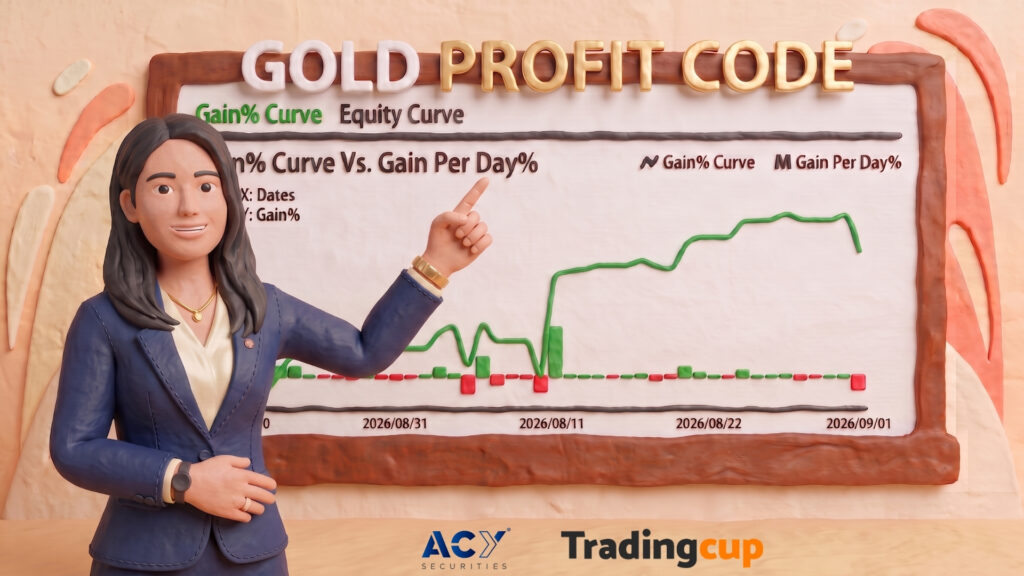
In the gold market, the core standard for measuring the long-term investment value of a copy-trading strategy is how well it achieves continuous and steady asset appreciation while effectively controlling risk and drawdown.
This article provides a comprehensive quantitative analysis based on 112 actual closed trades by signal provider “Xuemei Zhang / 雪梅 张” thoroughly breaking down her core performance indicators, position logic, and copy-trading allocation value.
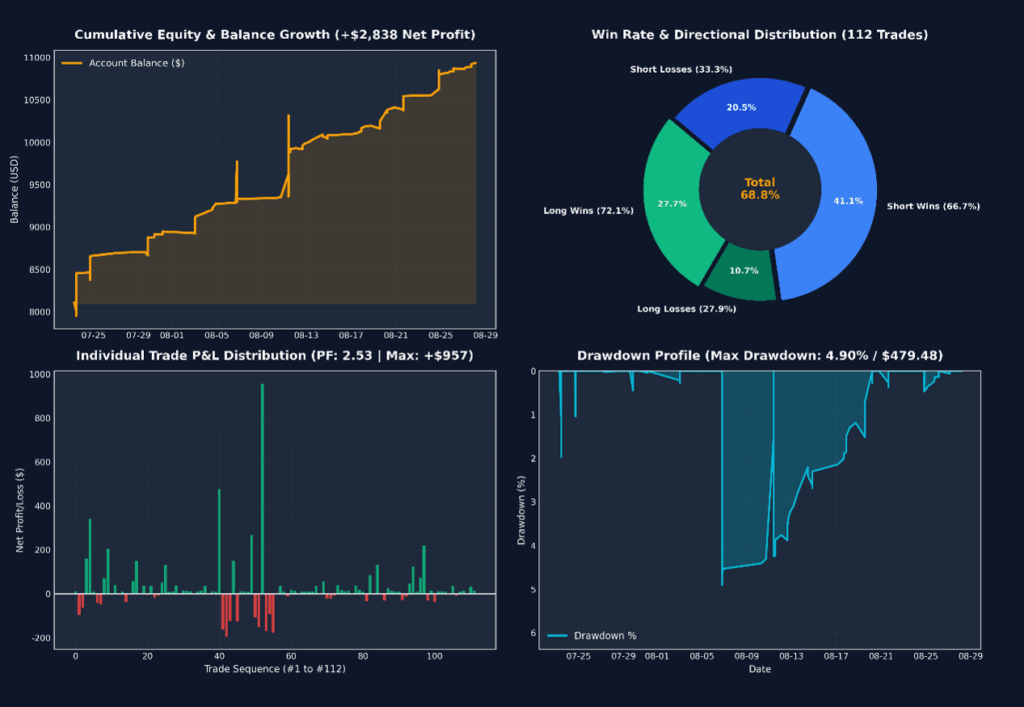
Overview of Core Quantitative Indicators and Return Quality Assessment
In just 38 days, “Xuemei Zhang / 雪梅 张” generated a net profit of $2,838.35 from an initial account principal of $8,000 (a time-weighted return of 45.12%), demonstrating an outstanding risk-reward ratio and exceptional return quality:
Micro-Analysis of Lot Size Distribution and Holding Periods
By conducting a micro-temporal breakdown of the holding period and opening lot sizes for each order, the strategy exhibits distinct characteristics of building positions in batches and differentiated closing:
- Opening Lot Size Ladder: The minimum lot size is 0.01 lots (used for light-position probing and anchoring direction), and the maximum single-trade lot size is 0.16 lots. The opening lot sizes follow a strict sequential progression (0.01 → 0.02 → 0.03 → 0.04 → 0.06 → 0.10 → 0.16).
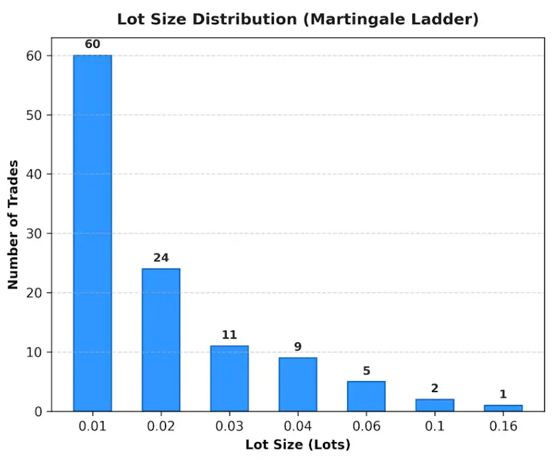
- Holding Period Comparison:
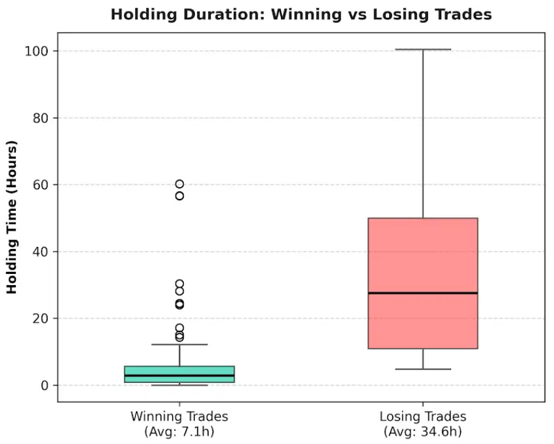
- Overall Average Holding Period: Approximately 15.69 hours, making it a typical highly efficient intraday to overnight swing strategy.
- Average Holding Period for Winning Trades: Only 7.10 hours. In trend-following and primary upward market conditions, the system can quickly reach the target take-profit level and secure profits, ensuring high capital turnover efficiency.
- Average Holding Period for Losing Trades: Approximately 34.58 hours. When facing short-term counter-trend fluctuations, the strategy demonstrates reasonable patience and grid buffer space, leaving a sufficient correction window for mean reversion in the market.
In-Depth Analysis of Trading Style and Position Scaling Mechanism
Based on tracking the orders and transaction details, the underlying logic of this strategy relies primarily on the following three main mechanisms:
1. Modified Fibonacci Grid Scaling
The strategy is not an extreme Martingale system that blindly doubles positions; rather, it adopts a strictly controlled, non-linear incremental scaling mechanism. It initially establishes a base position with 0.01 to 0.02 lots. When the price deviates from the entry point and reaches a preset grid interval, it gradually adds positions in batches of 0.03, 0.04, 0.06, 0.10, and 0.16 lots sequentially. The total holding lot size for a single group is usually capped at 0.32 lots, accounting for less than a 2% margin utilization rate on the $8,000 account. This effectively eliminates the risk of margin depletion caused by unrestricted scaling.
2. Basket Dynamic Average Price Closing Mechanism
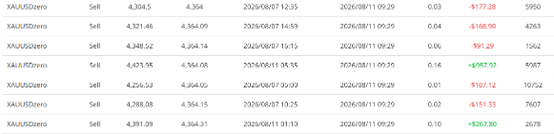
After multi-level scaling is executed, the core objective of the strategy is not to make every single base order profitable individually. Instead, it relies on the excess profits generated by heavy-position orders during pullbacks to quickly cover the floating losses of the early light-position orders. Once the comprehensive net profit of the entire position portfolio reaches the preset profit target, the system exits all positions simultaneously with a single click in the exact same second. For example, on August 11, the portfolio closed 7 orders; although the first 5 early small orders showed slight losses, the final 2 larger orders contributed over $1,225 in net profit, yielding an overall net profit of over $630 in a single cycle.
3. Deep Arbitrage Focused on a Single Gold Instrument
“Xuemei Zhang / 雪梅 张” focuses 100% on the gold zero-spread account (XAUUSDzero). This allows the strategy to fully enjoy the dual dividends of low trading costs combined with gold’s high volatility and strong mean-reversion characteristics, effectively avoiding the liquidity squeezes that cross-trading multiple instruments might trigger.
Copy-Trading Recommendations and Risk Management Guidelines for Investors
Taking into account the risk-reward characteristics of the strategy, it is recommended that copy-trading investors consider the following allocation plans:
- Capital Threshold and Proportional Allocation: It is recommended that the starting capital for copy-trading accounts be no less than $3,000 to $5,000. Investors should use a 1:1 or proportional lot size copy strategy (starting at 0.01 lots). This ensures that the account retains over 90% in ample free margin when encountering market conditions that require 4 to 6 levels of scaling.
- Copy-Trading Stop-Loss Settings: Given that the master account’s historical maximum drawdown is controlled at 5.31%, it is recommended to set a hard stop-loss threshold for copy trading at 12% to 15%. This provides sufficient resilience for the strategy’s normal grid fluctuations while also guarding against extreme black swan events.
- Long-Term Compound Interest Allocation Value: Powered by a high profit factor of 2.53 and steady low-drawdown performance, this strategy demonstrates excellent cross-cycle asset appreciation potential. It is well-suited for swing investors who pursue steady medium-to-high returns via medium-to-long-term copy trading.
Looking for the Best Copy Trading Strategy?
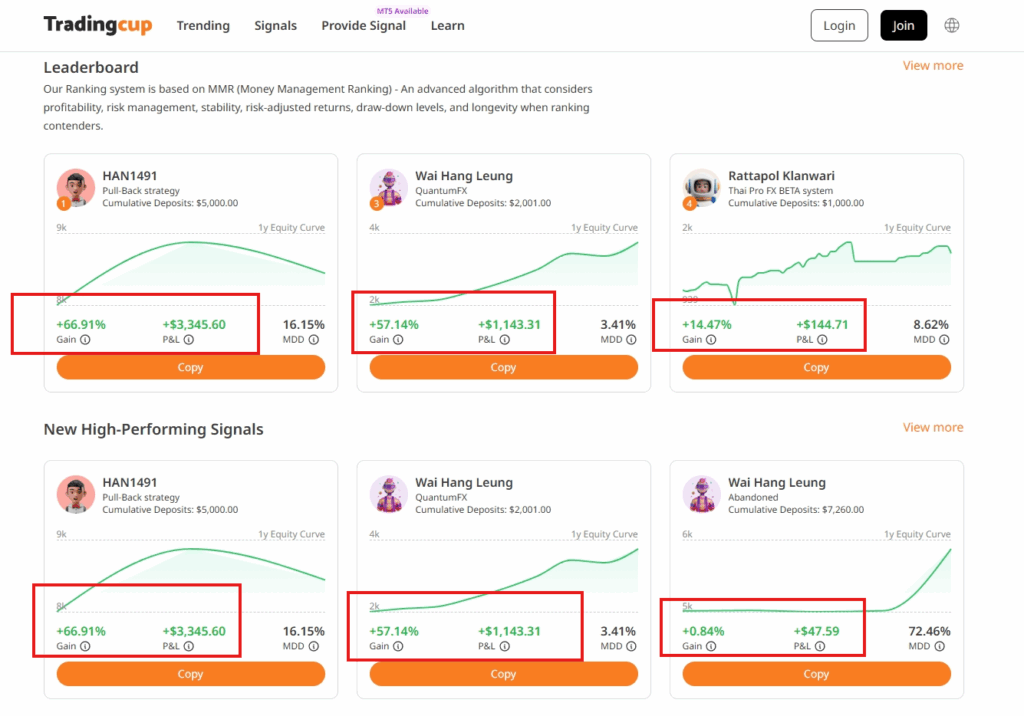
We’ve compiled a leaderboard of the most outstanding traders with excellent drawdown control and clear trading styles. This way, you’ll never feel lost when choosing who to follow and won’t blindly chase trends. Click to view the latest trader rankings and find out who is truly worth copying! Choose the right person, copy the right strategy, and from today, let copy trading truly create value for you.
Bonus Guide
What Makes an Effective Trading Portfolio?
- Diversification: Spread funds across various asset types (e.g., stocks, bonds, real estate, cash, precious metals) and industries/regions to reduce exposure to single-market volatility.
- Asset Allocation: Tailor allocations based on your risk tolerance, goals, and time horizon. Conservative portfolios emphasize fixed income, while aggressive ones lean into equities.
- Risk-Reward Balance: Each asset has different risk/return profiles. Ensure your portfolio avoids excessive exposure to high-risk or low-return assets.
- Low Correlation: Combine assets with correlations below 0.3 to enhance stability and provide a cushioning effect during market swings.
- Dynamic Rebalancing: Review and adjust your portfolio regularly as markets or personal goals change to stay aligned with your risk-return expectations.
- Clear Objectives: Define your financial goals (retirement, housing, education) before designing your strategy and time horizon.
- Discipline & Logic: Stick to your trading plan without emotional decision-making. Regularly reassess assumptions and market conditions.
(Disclaimer: This article is for informational and educational purposes only. It should not be considered financial advice. Always conduct your own research and consult with a qualified financial advisor before making any trading decisions.
For more detailed insights on developing daily trading routines, risk management, and effective position sizing strategies, explore additional articles on Trading Cup. Our trading experts at ACY and FinLogix are also great resources to guide your journey towards trading excellence.

Discover Our Best Trading Signals
At Tradingcup, you can browse through a selection of signals and review past performance before you decide to copy.
Become A Signal Provider
Share your expertise and become a signal provider so other traders can copy your trades.
Stay tuned to our blog for more trader spotlights and leaderboard updates.
Trading involves risks.
Visit the Tradingcup blog through the link below for more updates: https://www.tradingcup.com/learn
Related Copy Trading blogs:
- Understanding Market Liquidations: Liquidity Sweeps and Runs Explained
- 7 Essential Daily Habits of Successful Traders to Outperform Their Peers
- 10 Strategies You Can Copy off Our Best Copy Traders
- 5 Strategies Every Trader Can Master To Trade Better In A Trading Contest
- 2026 Copy Trading Scams Exposed: How to Spot Fraud
- A Swing Trading Strategy with an 83 Percent Win Rate and Low Drawdowns
- Forex Martingale Strategies Explained, The Good, The Bad and The Ugly
- Pyramiding Trading Tutorial – Pros & Cons & How to Use It